Projects

2025 -

Ongoing

Farmer Field Business School (FFBS)

The Farmer Field Business School (FFBS) is a gender-transformative, market-based, and nutrition-sensitive agricultural learning model that strengthens the skills and leadership of small-scale women farmers. FFBS supports farmers to improve productivity, profitability, climate resilience, and equitable participation in agricultural markets.

In Sri Lanka, the FFBS model is implemented under the Improved and Sustainable Agriculture Project, focusing on the groundnut, black gram, and backyard poultry value chains. The approach fosters peer-to-peer learning, group problem-solving, and shared decision-making, encouraging women to lead change within both their households and communities.

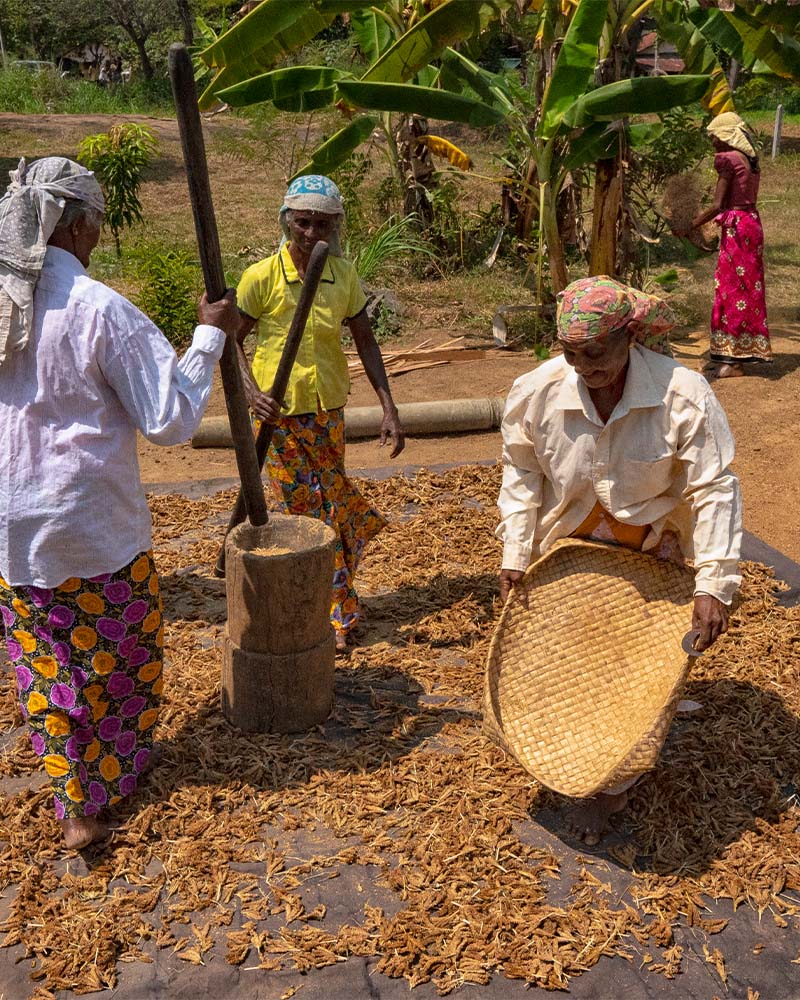
project implementation image

Implementation

  • 350 small-scale farmers (60% women) mobilised into FFBS learning groups.
  • Lead farmers trained to guide peers through practical demonstrations and seasonal decision-making.
  • Establishment of demonstration plots for hands-on learning in climate-responsive crop management and poultry practices.
  • Group-level business planning and value-chain assessments to improve market readiness.
  • Active digital learning and continuous engagement to support adaptive and responsive farming decisions.
  • Exchange learning and cross-visits to encourage innovation and broader knowledge sharing.
  • FFBS is a “living approach” — ongoing, participatory, grounded in real community needs, and evolving over time.

Beneficiaries

Direct beneficiaries:

  • 350 small-scale farmers (60% women)
  • 200 women gaining access to value addition and market linkages

Indirect beneficiaries:

  • Over 8,000 community members, family members, and local value chain actors

Value chains supported:

  • Groundnut
  • Black Gram
  • Backyard Poultry

Key Outcomes

The project contributes to:

  • Increased adoption of sustainable and climate-resilient crop and poultry practices.
  • Improved yields, productivity, and household income stability.
  • Stronger women’s leadership in farming groups and agricultural markets.
  • Strengthened producer collectives with improved negotiating power and collective voice.
  • Enhanced nutrition, resilience, and economic security at household and community levels.
partner icon

Supporting Donors & Partners

This project was made possible through the generous support of our donors, whose contributions played a vital role in planning, implementation, and successful delivery. Their commitment to social impact and sustainable development helped drive meaningful change and ensured that the project objectives were achieved for the benefit of the communities involved.