2025 -
Promoting Economic Justice for Women (PEJW)
The Promoting Economic Justice for Women (PEJW) project is a comprehensive endeavour aimed at addressing systemic discrimination and fostering economic justice for women in the Micro, Small, and Medium Enterprises (MSMEs) sector in Sri Lanka. By employing a Systems Change Approach, the project goes beyond individual interventions to address structural barriers that prevent women entrepreneurs from fully participating in the economy. PEJW targets women-led MSMEs, working to reshape policies, institutional practices, and regulatory frameworks that hinder women’s financial inclusion, business growth, and leadership opportunities.
Micro, small, and medium enterprises (MSMEs) form the backbone of Sri Lanka’s economy. Women own or lead approximately 25% of these enterprises, yet their overall contribution to GDP is not systematically measured due to limited sex-disaggregated economic data. Women entrepreneurs continue to face persistent barriers: restricted access to credit because of inadequate collateral, financial services that rarely address their needs, limited entry into supply chains, and a widening digital divide. Gender-based violence (GBV), including economic abuse, mobility restrictions, intimate partner violence, and workplace harassment, further constrains women’s participation in business.
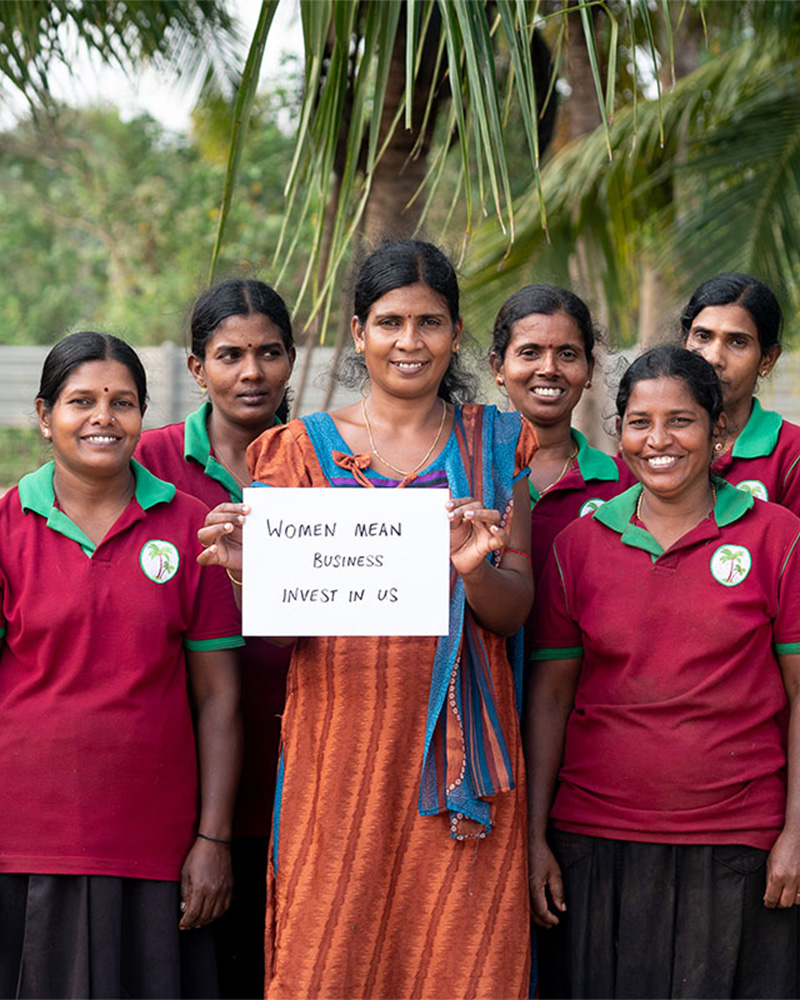
These challenges keep many women-led enterprises small, informal, and vulnerable. Chrysalis, together with multi-stakeholders from government and market actors, is undertaking a bold experiment to establish a national-level coalition (Women Mean Business Coalition), to reshape policies, practices, and regulations hindering women's empowerment in the MSME sector. The Women Mean Business (WmB) Coalition, convened by Chrysalis and funded by global philanthropic collaborative Co-Impact, is positioning women-led enterprises at the centre of the country’s economic recovery. Its ambition is not simply to support individual entrepreneurs but to reshape the structures of finance, policy, and markets so that women-owned businesses can thrive on equal terms.
The coalition brings together key actors from government, the private sector, civil society organisations, development partners, and the banking and financial services industry, recognising that sustainable change requires coordinated action across institutions and sectors. Notable members of the coalition include the Ministry of Industry and Entrepreneurship Development, the Ministry of Women and Child Affairs, the Central Bank of Sri Lanka, the Credit Information Bureau of Sri Lanka and the United Nations Development Program (UNDP). The coalition also includes 17 financial institutions, reflecting strong engagement from the formal financial sector.
Pillars

Inclusive Business