Projects

2024 - 2026

Ongoing

Strengthening Women and Civil Society Engagement to Combat Poverty and Hunger in Sri Lanka (RISE)

Sri Lanka’s post-COVID poly-crisis, which was marked by economic recession, governance failures, and long-standing inequalities, deepened poverty, hunger, and vulnerability, disproportionately affecting women, especially in Uva and Central Provinces. 

One in six Sri Lankans is multidimensionally poor, with rural and estate communities among the hardest hit. Women in the districts of Central and Uva Provinces are confronted with economic shocks, the double burden of paid and unpaid work, rising living costs, limited access to finance and resources, and exclusion from decision-making. Many remain trapped in subsistence livelihoods, informal work, or low-skilled micro-enterprises, constrained by structural, policy, and social barriers. Female smallholder producers and women-led CSOs operate in isolation, facing bureaucratic hurdles, weak institutional support, safety concerns, and unequal opportunities. Government agencies also struggle with limited capacity and service delivery. These interconnected challenges highlight the urgent need for systemic, inclusive interventions to empower women and youth, strengthen CSOs, improve access to resources and markets, and break cycles of poverty and marginalisation.


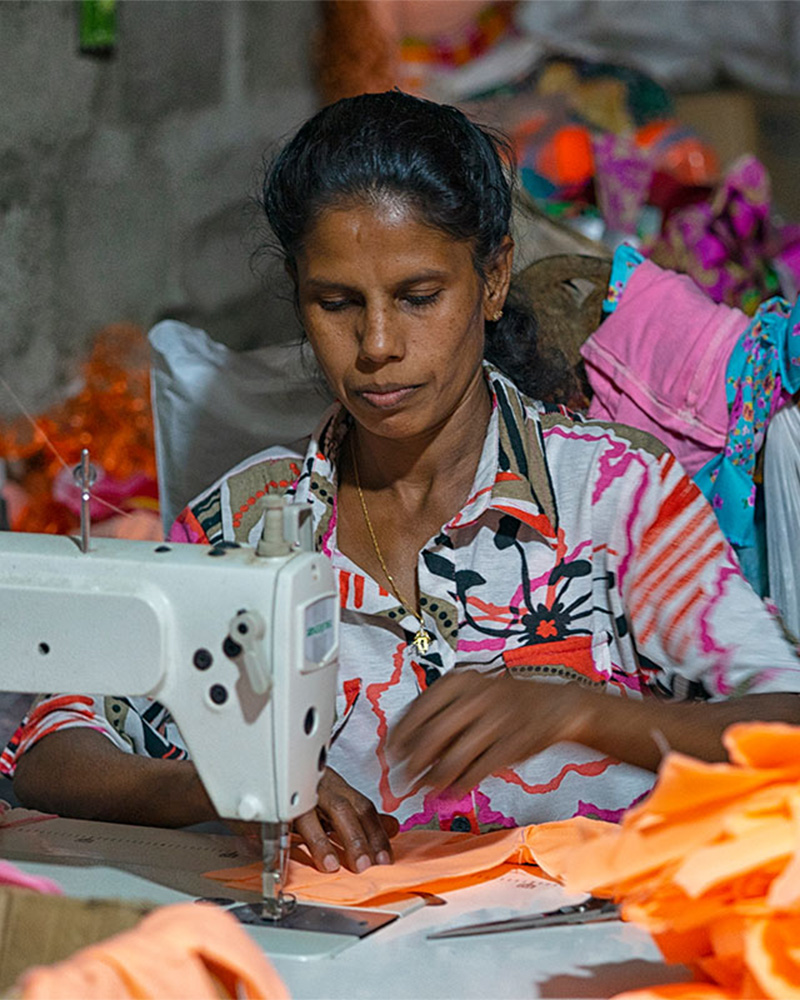
The RISE project, also known as 'Strengthening Women and Civil Society Engagement to Combat Poverty and Hunger in Sri Lanka, ' is funded by the Federal Ministry of Economic Cooperation and Development (BMZ) in Germany, with CARE Deutschland e.V. as a key partner. In Sri Lanka, Chrysalis leads the implementation of this initiative, which aims to reduce poverty and food insecurity through women’s leadership and collective action. The project empowers women farmers with climate-smart agricultural training, supports them to form cooperatives for better market access, and strengthens links to vital social safety nets. Beyond livelihoods, RISE creates spaces for women and Civil Society Organizations (CSOs) to collaborate with local authorities in addressing hunger and broader socioeconomic challenges — building resilient, self-reliant rural communities that can withstand crises and thrive sustainably.

The project addresses these structural challenges by empowering women, strengthening CSOs, improving market access, and promoting systemic change for poverty reduction and sustainable livelihoods.


Pillars


Inclusive Business

Inclusive Business

Inclusive Governance
Inclusive Governance

project implementation image

Our Intervention

The project aims to economically empower women leaders and producer groups in Sri Lanka’s Uva and Central regions by strengthening inclusive, climate-resilient, and gender-transformative market systems. It works with 60 civil society organisations (CSOs)/producer groups, 240 women leaders, and 50 MSMEs across key agricultural and value chains. 

Through transparent selection, comprehensive capacity assessments, tailored training modules, and structured coaching and mentoring, grounded in women leaders are equipped to strengthen organisational performance, advocate for their rights, and lead sustainable business initiatives.

The project integrates seed capital, business planning support, and access to Business Service Centres to enhance MSME competitiveness, market access, and adoption of climate-smart, low-carbon, and circular economy practices. Business resilience toolkits further improve preparedness for economic and climate shocks.

Parallel efforts are made to address systemic gender barriers through surveys, dialogues, male champion engagement, advocacy initiatives, and large-scale social media campaigns to shift discriminatory norms and promote non-violent, enabling environments for women.

At the systems level, district-level coalitions and multi-stakeholder partnerships are established to align government, private sector, and civil society actors. These coalitions develop and implement district plans that promote inclusive economic development, food security, and poverty reduction, ensuring sustainability and large-scale community impact beyond the project period.


Beneficiaries

Direct Participants: 1,500 women leaders, MSMEs, and producer group members.

Indirect Participants: 7,500 community members.

Focus on women, youth, and marginalised groups in Uva and Central Provinces, including rural and estate communities.


Participant Testimonials
"Several months ago, when I visited the Kandy City Centre, I received an application to apply for Chrysalis support. I took it and thought this was just another application that would never turn into action. However, I received a phone call, yet I did not fully trust it. I received several follow-up phone calls, which finally led me to apply for it. After several weeks, I received a message on a Chrysalis official letterhead asking me to come for a pitching session. I happily went, as I had never received an invitation for an interview. The interview itself was a learning process for me. After a couple of days, I received a letter from Chrysalis saying that I had successfully faced the interview and indicating that I was selected.  I was so happy and energised upon receiving the letter. I’m looking forward to uncovering my full potential with the support that I will receive on this journey with Chrysalis over the next two years."

M G Nilmini Sriyananda, MSME, Kavisha Products, Kandy.

Producer Groups - Shramasshakthi Kantha Local Food, and Pragathi Kantha Samithiya for spices.

Key Outcomes

  • Empowerment of 240 women leaders through training, mentoring, and leadership development.
  • Strengthening the institutional and operational capacities of 60 CSOs to better advocate for gender equality and social justice.
  • Direct support to 110 women-led or rural businesses through grants, technical assistance, and market access.
  • Promotion of climate-resilient and sustainable agricultural practices.
  • Shifting discriminatory gender norms through dialogues, surveys, and social media campaigns.
  • Establishment of district-level multi-actor coalitions to influence policy, improve access to resources, and coordinate efforts in poverty reduction and food security.


Quantitative Results

  • District-level project orientations were completed in the five project operating districts.
  • Sixty Producer Groups and 50 MSMEs were selected through an open, transparent, competitive process in the five project operating districts.
  • The capacity assessment of all selected Producer Groups was conducted. 
  • ToT training modules on livelihoods and social strengthening, and business plan development were completed


partner icon

Supporting Donors & Partners

This project was made possible through the generous support of our donors, whose contributions played a vital role in planning, implementation, and successful delivery. Their commitment to social impact and sustainable development helped drive meaningful change and ensured that the project objectives were achieved for the benefit of the communities involved.

Funders: The Federal Ministry for Economic Cooperation and Development (BMZ), Germany

Government Partners:

  • Ministry of Women, Child Affairs & Social Empowerment
  • Ministry of Finance
  • Ministry of Industries
  • Provincial Councils (Uva & Central)
  • Provincial Departments of Industries
  • District Secretariats
  • Divisional Secretariats
  • Department of Agriculture
  • Agrarian Services
  • Livestock Department
  • Irrigation Department
  • Samurdhi / Swesuma Programme

Civil Society & Community Partners:

  • 60 women-led CSOs & producer groups (cooperatives, farmer networks, Saubagya groups, CDFs, Praja Mandalas)
  • 240 women leaders from target CSOs
  • 50 women-led / inclusive MSMEs

Other Stakeholders:

  • Buyers and intermediaries
  • Financial institutions
  • Regulators
  • Media
  • Chambers of Commerce
  • IDB
  • NEDA
  • Business Service Centres (BSCs)
  • Provincial & district-level women’s rights groups