Case Studies

Latest Case Study

08, Mar 2025

Nourishing Communities and Futures: Venasa Caterers’ Journey to Inclusive Growth

In the quiet hills of Matale, central Sri Lanka, verdant landscapes of spice gardens, paddy fields, and small-scale agriculture define the local economy. The district is a tapestry of ethnic and religious diversity, with communities coexisting across rural villages and plantation estates. Despite this rich cultural and natural wealth, many young people in Matale face limited opportunities, often entering the workforce unskilled due to low enrolment and retention rates in primary education among both boys and girls. According to the UNDP Multidimensional Vulnerabilities Impact Report, these educational gaps contribute to fragile livelihoods, high levels of unemployment, and the prevalence of precarious informal employment. Against this backdrop of untapped potential and economic vulnerability, small enterprises have the power to transform local communities by creating meaningful work, building skills, and fostering inclusive growth.

Venasa Caterers stands as one such example, where vision and perseverance meet opportunity. A humble kitchen that blossomed into a vibrant model of inclusive, sustainable enterprise. Venasa Caterers, founded by Sugath Udagedara in 2018 and formally registered in 2019, is more than a catering service. It embodies resilience, compassionate leadership, and community driven growth deeply rooted in Sri Lankan culture. Today, Venasa Caterers serves nearly every major government institution in the Matale district, from the Divisional Secretariat, Police, and Zonal Education Offices to diplomatic events, handling up to 90% of local government food orders. This remarkable growth, achieved through word-of-mouth alone, reflects not only the quality of the service but also Sugath’s commitment to creating opportunities for local people. He mastered every aspect of the business on the job, from using cutlery and serving diplomats to plating and managing large-scale events, demonstrating a steep learning curve guided by humility, adaptability, and a vision for inclusive, community-centred enterprise.

Catalyst for Change: Venasa Caterers’ Journey of Inclusion and Sustainability with FICE

Sugath first learned of the Chrysalis FICE programme through the Divisional Secretariat. With its support, Venasa Caterers received essential catering equipment buffet sets, steamers, and other tools—that immediately elevated both operations and professional presentation.

“These tools elevated our service and we can now cater with efficiency, maintain hygiene, and meet demand with confidence.”

Beyond equipment, the FICE project also opened new perspectives through training. The insights he gained proved transformative. He began to see his enterprise not only as a livelihood but also as a platform for youth empowerment, inclusion, and social coexistence. By integrating better business planning and sustainable practices, Venasa Caterers evolved into more than a service provider. It became a vehicle for inclusive growth, shaping opportunities for others while strengthening community bonds.

An Inclusive Employment Model

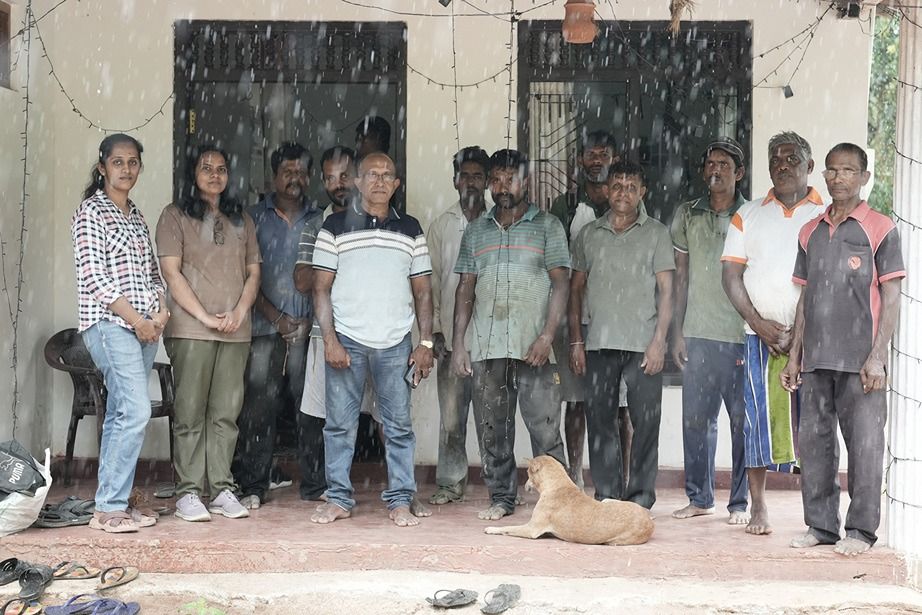
At the heart of Venasa Caterers’ success is its deeply inclusive employment model one that directly reflects the values reinforced through the FICE project. Sugath recruits across ethnic, age, and gender lines, ensuring that his workforce mirrors Sri Lanka’s rich diversity. Older workers, often displaced or unemployed, are engaged in packaging and preparation; young people, many from marginalized estate-sector communities, are hired for service roles. To support them, Sugath provides accommodation, uniforms, and meals, creating a “family-like environment” where Sinhala and Tamil, men and women, youth and elderly, work side by side.

“Our business needs both young and older employees, and I believe everyone here truly deserves their place. I can see that the young boys especially are enjoying their work.”

Through FICE mentoring, Sugath began to view his enterprise not only as a business but also as a social ecosystem. He introduced measures that strengthen inclusion and wellbeing: a uniform system that instils pride, and a zero-tolerance policy on alcohol or drug abuse that promotes safety and professionalism. Once plagued by high turnover, Venasa Caterers now retains a loyal core team, with some members serving for over four years a rare achievement in the catering sector.

While lack of capital has slowed construction of a purpose-built catering facility and the recruitment of additional staff, FICE insights have helped Sugath develop strategies to expand inclusivity. He is actively creating opportunities for part-time female staff in client-interaction roles, recognizing both the confidence it instils in young women and the positive image it projects for the business.

“It boosts our image, and gives young women the confidence to shine in front of large crowds,”

On the management side, training through FICE project encouraged him to adopt structured practices, such as outsourcing administrative tasks like EPF/ETF contributions, tax filing, and auditing to professionals, freeing his time for operations and growth. He has also begun applying small but impactful learnings from FICE mentoring sessions, including improved quality monitoring systems, more transparent financial practices, and strategic approaches to scaling. These incremental but deliberate changes reflect the transformative influence of the project, equipping entrepreneurs not only with tools but with the mindset to embed inclusivity, sustainability, and resilience into every layer of their businesses.

A Small Business Championing Progressive and Inclusive Measures

Sugath envisions a purpose-built, eco-conscious catering facility that generates employment, responds to community needs, and sets a standard for sustainable business practices. He already has the land, the plan, and the vision. What remains is the capital to bring it to life.

With continued support from programmes like the Chrysalis FICE initiative, as well as new strategic partnerships, Venasa Caterers has the potential to serve as a national model of how small enterprises can scale while staying rooted in equity, culture, and care. The next phase of growth will allow Sugath to embed practices that strengthen green innovations, expand inclusive hiring, and deepen workplace systems that ensure dignity, fairness, and opportunity.

By maintaining diversity, equality, and inclusion as guiding principles, Venasa Caterers exemplifies how responsible business can drive both social impact and sustainable economic p

Read More

Other Case Studies

case study thumbnail

Restoring Canals, Reviving Cultivation: How Farmers in Thambilawinna Secured Water for Their Fields

The Challenge

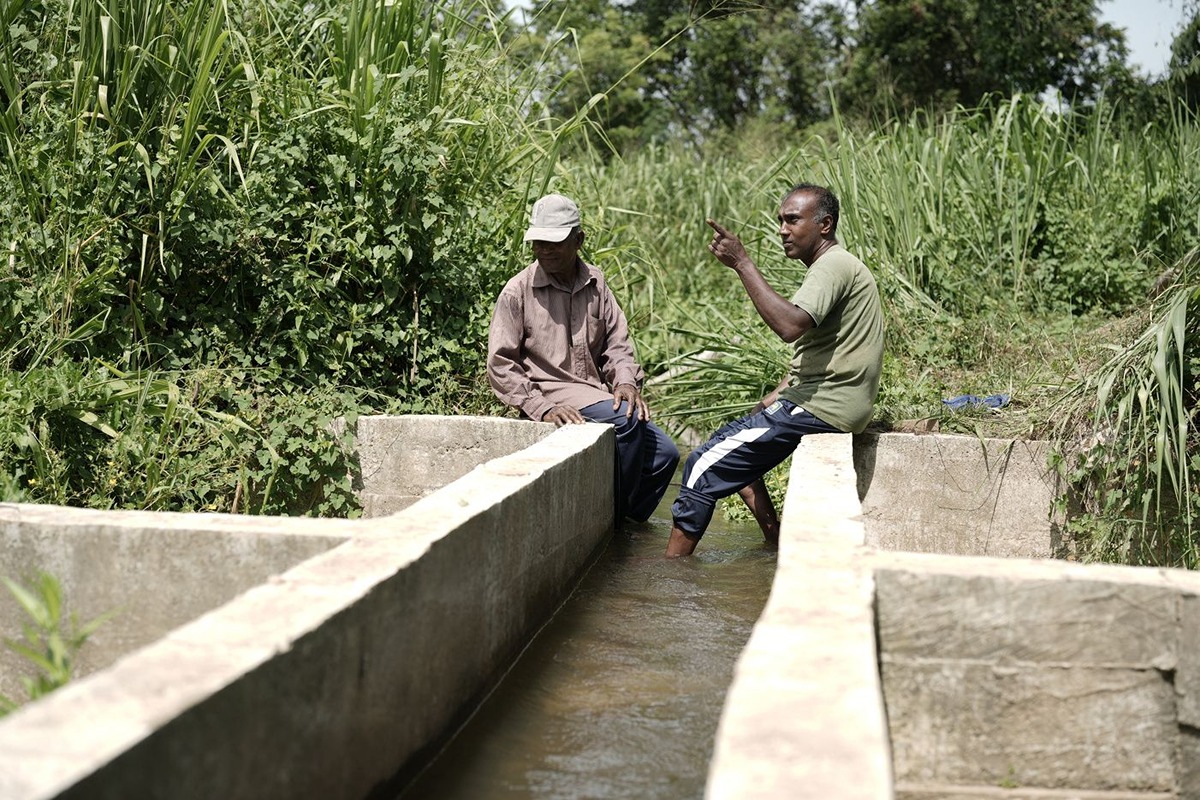
Access to water is the lifeline of farming communities. For decades, the Thambilawinna Farmers’ Organization in the Monaragala District, Uva Province struggled with deteriorating irrigation systems that limited their ability to cultivate during both Yala and Maha seasons. Thanks to the joint efforts of the farmers, the Department of Agrarian Development Services, and Chrysalis— with support from the with the support from Hilton foundation funded – Support Communities to Ensure Food Security and Build their Resilience project. —this challenge has now been addressed, bringing hope to over 75 farming families.

 During the 2025 Yala season, farmers faced a serious issue: the Molada sluice gate’s inner structure had collapsed due to erosion, making it difficult to regulate water flow. While water was released from the sluice gate, it did not flow properly through the canal, resulting in waterlogging in some areas and scarcity in others. At the same time, the main canal in Thambilawinna, damaged in several places for more than 50 years, continued to waste precious water through leakages and blockages. Over 60 acres of farmland and 75 farmers, including 15 key farmers, were directly affected. Cultivation became uncertain, and family’s dependent on paddy and crop farming were placed under increasing stress.

 The Intervention

Recognizing the urgency, Chrysalis, together with Monaragala District Department of Agrarian Development Service, visited the site. Farmers highlighted the areas in critical need of repair— especially the Molada sluice gate and damaged canal sections. With financial support from Chrysalis and the Hilton foundation funded – Support Communities to Ensure Food Security and Build their Resilience project, and technical expertise from the Department of Agrarian Services, renovation work was launched. Despite the challenge of beginning work mid-Yala season and the tight deadline of just 15 days, farmers contributed their full participation and labour to complete the project on time.

The Results

·        Sluice Gate Repair: The collapsed structure was rebuilt, enabling smoother water release and distribution across paddy fields.

·        Canal Renovation: Concreting key sections of the canal prevented leakage, improved water flow, and ensured better utilization.

·        Improved Water Access: Around 75 farmers—including 60 paddy farming families—can now access water without blockages.

·        Sustainable Cultivation: With reduced water wastage, farmers are now able to cultivate successfully in both Yala and Maha seasons.


Farmer’s Voices

Secretary Mr G. Nimal Jayaweera shared: "Although we faced difficulties completing the work during cultivation, with Chrysalis’ support we finished the renovation by the end of the Yala season. Now, unlike previous years, we expect proper water release for both 2025 and 2026 Maha seasons."

The Secretary of the Organization Mr V. Senevirathna added: "This canal serves 60 paddy farming families and nearby cultivators. With your intervention, the farmers now have reliable water access. We thank Chrysalis, the Hilton Hotel project, and the Agrarian Services Department for their guidance and contribution."

"Thanks to the technical officer who guided us, we knew exactly how to repair the canal without losing time or money. His advice made the work much easier." — Mr C. Nishshanka – Field officer, Department of Agrarian Development Service


Looking Ahead

The successful completion of this project has renewed farmers’ confidence. With restored water systems, communities in Thambilawinna are now better equipped to face future cultivation seasons. Farmers also urge continued support to address similar irrigation challenges in other areas, ensuring more communities can benefit from sustainable water management.

View Case Study
case study thumbnail

The Road That Changed Everything : A story of resilience and rural revival in Batticaloa

The Problem: A Path Full of Struggles

“Only one person could walk at a time. We carried inputs on our backs. Cattle couldn’t pass, and if someone slipped, there was no way to pull them up.

- Iyathurai Paskaran

In the remote village of Pansenai, nestled in the heart of Batticaloa, farmers lived in quiet hardship. While their fields were rich with potential, reaching them was a daily battle. With no proper access road, farmers from the Othiyankuda-aru Farming Society had to traverse narrow, muddy paths, often flooded during the rainy season.

“Only one person could walk at a time,” says Iyathurai Paskaran, President of the Pansenai Farmers Organization.

The situation wasn't just a burden for adults. Over 30 children from farming families had to walk this same path to reach school, often barefoot and soaked during the monsoons.

“Sometimes, kids had to be carried through the floodwater,” adds Baaskaran. “It wasn’t safe, but we had no choice.”

Without road access, farmers couldn’t bring their harvests out easily, losing time, energy, and market value. The lack of access to machinery or emergency transport only added to the risks.

The lack of road access affected every part of their lives:

·        Difficult transportation of seeds, tools, and harvest

·        Poor access to education for children

·        Inaccessibility during rains and floods

 The Turning Point: A Road to Opportunity

When Chrysalis reached the community, many were skeptical. The villagers had seen organisations visit before—asking questions but leaving without follow-up.

“They always came, took notes, and left,” says Sinnathamby Sureshkumar, Secretary of the Farmers Organization. “We didn’t expect anything different.”

But Chrysalis returned; not with surveys, but with a plan. In collaboration with the community, they initiated the construction of a dedicated agro- road, carefully designed to serve the real needs of the farmers.

 Key Benefits of the Agro-Road:

·        Access to fields

Before: By foot, narrow unsafe trail

After: Bikes, tractors, cattle carts

·        Harvest transport

Before: Delays, crop damage

After: Timely, efficient, increased income

·        School access

Before: Risky, seasonal absenteeism

After: Regular and safe attendance

·        Flood vulnerability

Before: High – path submerged

After: Flood-resilient design, year-round use

·        Safety from elephants

Before: Frequent encounters

After: Safer travel via clear path


Beyond Roads: A Path to Resilience

The agro-road’s impact extends beyond agriculture. It has restored dignity to a community that felt cut off and unheard. Women farmers now travel safely. Inputs arrive on time. Produce reaches market while fresh. And most importantly, the community now feels seen and supported.

“This road gave us more than access. It gave us a voice, and the belief that development is possible for people like us”



View Case Study
case study thumbnail

Sarukshan’s First Step into a New World

Sarukshan’s First Step into a New World

Seven-year-old Sarukshan stood nervously at the doorway, holding tightly to the strap of his new school bag. His uniform was a bit loose, his shoes too stiff. He looked up at his mother. "Amma... I'm going to school today, no?". For most children, this would be an ordinary moment. For Sarukshan, it was a turning point—his very first day of school.

Born into a family struggling to survive in a fragile shelter on unlicensed land in Nanuoya, Sarukshan had never been to school. His father, Selvakumar, worked in Kandy as a daily wage contractor. His mother, Sathyavani, uneducated and overwhelmed, didn’t know that her children had a right to education, or how to apply. The costs of uniforms, shoes, and supplies were simply out of reach.

They belong to the Malayaha Tamil community, descendants of estate workers brought to Sri Lanka during colonial times. Generations later, many still face chronic poverty, lack of land rights, poor infrastructure, and limited access to government services. In such communities, children like Sarukshan often fall through the cracks—out of school, unnoticed, and forgotten.

In 2023, Sarukshan’s story changed when local authorities identified his case through a community outreach initiative supported by Chrysalis. Recognizing the urgency, a coordinated effort between the District Secretariat, Grama Niladhari officers, and the Zonal Education Department helped enroll him in Navalar Tamil Primary School.

But this wasn’t just about paperwork. Sarukshan received a full set of school supplies—uniforms, shoes, a backpack, books, and stationery. More importantly, his parents were included in awareness sessions to understand education rights and how to support their children.

On his first day, Sarukshan walked to school alone—the school was nearby, and for the first time, he belonged. Within days, he began reciting rhymes to anyone who would listen. "I want to be a police officer," he says now, proudly.

His transformation inspired his mother too. "We didn't know we had this right," she says. "We thought it was too late. Now, our other children will go to school too".

But challenges remain. One of his younger siblings was found to be underweight—a common issue in these underserved communities. The family has since been referred to clinical support, another crucial step toward long-term well-being.

Sarukshan’s story is one of many in the estate sector, where children are still denied opportunities due to poverty, lack of awareness, and systemic neglect. It’s also a story of what’s possible—when someone listens, when systems reach the unreached, and when families are empowered.

Today, Sarukshan walks proudly to school with a bounce in his step. His shoes still squeak, but he doesn’t mind. Each step is a small victory—for him, for his family, and for a community slowly finding its voice. And it all began with someone saying, "You matter".

View Case Study
case study thumbnail

Beyond Promises : How Chrysalis Became a True Friend to a Farmer in Need

In the quiet village of Savukkadi, Batticaloa, the rhythm of life for Jusai Rajan has long been dictated by the land. Since the age of 14, he has worked as a farmer—tending to fields of coconut, mango, vegetables, and rearing cattle. The days were long, the sun unforgiving, and the uncertainties many. But farming was all he knew—and all he had.

"There were days," Jusai recalls, "when I would work two acres of land with just my hands. During the hardest times, there was an Anna—not my own brother, but someone I deeply respect—who stepped in to help. But mostly, it was just me and the land".

Like many smallholder farmers in the Eastern Province, Jusai Rajan had seen development organisations come and go—promising much, delivering little. So, when Chrysalis first reached out, asking what he needed, he listened politely but didn’t expect much. "I thought it would be like the others," he admits. "They ask questions, take notes, and then disappear".

But this time was different. Weeks later, Chrysalis called him back—not with empty promises, but with an invitation. They were bringing together local farmers for a series of trainings focused on modern farming techniques, resource management, and sustainable agriculture. Jusai Rajan attended, and for the first time in years, he felt like someone was truly listening. "They didn't just tell us what to do," he says. "They asked us what we needed".

For years, Jusai Rajan watered his crops the traditional way using large pipes that wasted water and demanded long, exhausting hours of manual labour. During dry seasons, the struggle was even greater; sometimes, he had to skip farming altogether because water simply wasn’t enough.

When Chrysalis provided a complete set of materials for a sprinkler system to cover ½ acre of land, everything changed. "It was more than just equipment," he says. "It was relief. It gave me time back. It gave me strength". The sprinkler system not only helped him save water but also allowed him to expand his farming area and grow more efficiently.

At the same time, Chrysalis supported him with high-quality seeds—an additional boost during a difficult personal period, when his daughter was seriously ill. "Those seeds," Jusai Rajan reflects, "gave me mental confidence. I saw them as a chance to start again".

Today, Jusai Rajan’s farm is thriving. In addition to his staple crops, he now cultivates dry fish, cashews, and various vegetables. He maintains meticulous records—a practice introduced to him during the Chrysalis trainings. This simple habit, he says, has helped him become more strategic and resilient in his decisions.

More than the tools or seeds, what Chrysalis offered Jusai Rajan was dignity and hope—things often lost in the margins of poverty. "During hard times," he reflects, "anyone who helps you is not just support—they are a friend. Chrysalis became that friend to me".

Jusai Rajan’s story is just one among many, but it reflects a deeper truth about rural resilience. In places like Batticaloa, where climate, conflict, and neglect have left deep scars, it takes more than aid—it takes trust, consistency, and respect. Through partnerships grounded in empathy, Chrysalis is helping farmers like Jusai not just survive, but reclaim their right to thrive.

View Case Study
case study thumbnail

Restoring Water, Empowering Farmers: A Turning Point for Damana

In the farming lands of Damana, Ampara, water has always been the deciding factor between a successful harvest and empty fields. For months, however, the farmers here struggled with a broken culvert that prevented water from reaching their paddy lands.

"Now the water flows freely, and for the first time in years, we feel confident about both Yala and Maha seasons".

The temporary sandbags placed in the channels only made matters worse—when upstream gates were opened, downstream fields ran dry; when downstream got water, the upstream remained parched . Yala season cultivation became nearly impossible, and Maha season yields were limited. Farmers grew desperate, often gathering in groups to manually remove sandbags just to let a trickle of water flow.

When Chrysalis entered the scene, the results were immediate and striking. Water now flows smoothly across the entire tract, reaching even the farthest fields without obstruction. Farmers no longer waste hours battling sandbags—they now have the security of steady irrigation.

"This project has been a 200% success," says Mr. K.L.A.R.S Kodithuwakku, Chairman of the Farmer Organization, with pride. "Now we can cultivate in both Yala and Maha seasons, and more land than before has access to water".

For the people of Damana, this was not just the repair of a culvert. It was the restoration of hope, dignity, and livelihood. Thanks to the Field officer of Agrarian Development Service and Chrysalis, the water has returned to the fields—and with it, the promise of a stronger harvest and a better future.

View Case Study
case study thumbnail

Together We Rebuilt: How Community Action Restored Soranathota’s Lifeline

"Today, 38 farming families—more than 100 individuals—are once again able to cultivate their land in both Yala and Maha seasons".

"I extend my heartfelt gratitude to Chrysalis," says the Secretary of the Soranathota Parakum Farmers Organization, reflecting on a journey that brought new life to his community’s fields.

For generations, the Udahampalana canal has been the heartbeat of farming in Soranathota. With over 100 years of history, it has carried water to nourish paddy fields and sustain families. In 2002, the canal was rebuilt with government support under the Provincial Irrigation Department. Yet, because wire mesh reinforcement was not included in the design, the canal soon began to break in several places, weakened by the roots of nearby areca nut trees.

By 2023, the situation had become dire. The canal broke severely, cutting off the water supply. Two acres of agricultural land were directly affected, and farming in the area began to decline, impacting farmers cultivating paddy and other field crops such as maize, vegetables, and fruits.

Desperate, the farmers reached out to local authorities—the Development Officer and the Commissioner of Agricultural Services—who guided them towards Chrysalis. There was a possibility of assistance, but it would require the community to step forward as well.

"We believed that if materials were provided, we farmers could come together to do the work," recalls the Secretary. With 150 farming families in the area and 12 acres of paddy fields depending on this canal, the community did not hesitate. Farmers rallied together; some brought stones, others contributed labour. "My brother and I both work in farming. For a long time, we couldn't get anything done. But when Chrysalis came forward with materials, we felt hope again," he says.

The community’s spirit, combined with Chrysalis’s support, made it possible to restore the canal. Today, 38 farming families—more than 100 individuals—are once again able to cultivate their land in both Yala and Maha seasons.

The Secretary remembers how close they came to giving up: "We went to the Agrarian Services office, but they said the deadline had passed. Just as we were about to lose hope, they called back and told us we could move forward with Chrysalis's support. That moment changed everything".

This project is more than a repaired canal—it is a story of resilience, collaboration, and the power of community action. Thanks to Chrysalis and the determination of the Soranathota farmers, a century-old lifeline has been revived, ensuring food security and livelihoods for generations to come.

"We are truly grateful," says the Secretary. "With Chrysalis's help, we were able to bring water back to our fields. We hope they will continue to support underdeveloped villages like ours".

View Case Study