15, Jul 2026
Restoring Livelihoods and Building Climate Resilience for Farming Communities in Mullaitivu
For many farming families in Mullaitivu District, agriculture is more than a source of income, it is the foundation of their livelihoods and food security. Following the devastating impact of Cyclone Ditwah, hundreds of vulnerable households in the Divisional Secretariat (DS) divisions of Oddusuddan and Manthai East were left struggling to recover as crops, farmland, and livelihoods were severely affected.
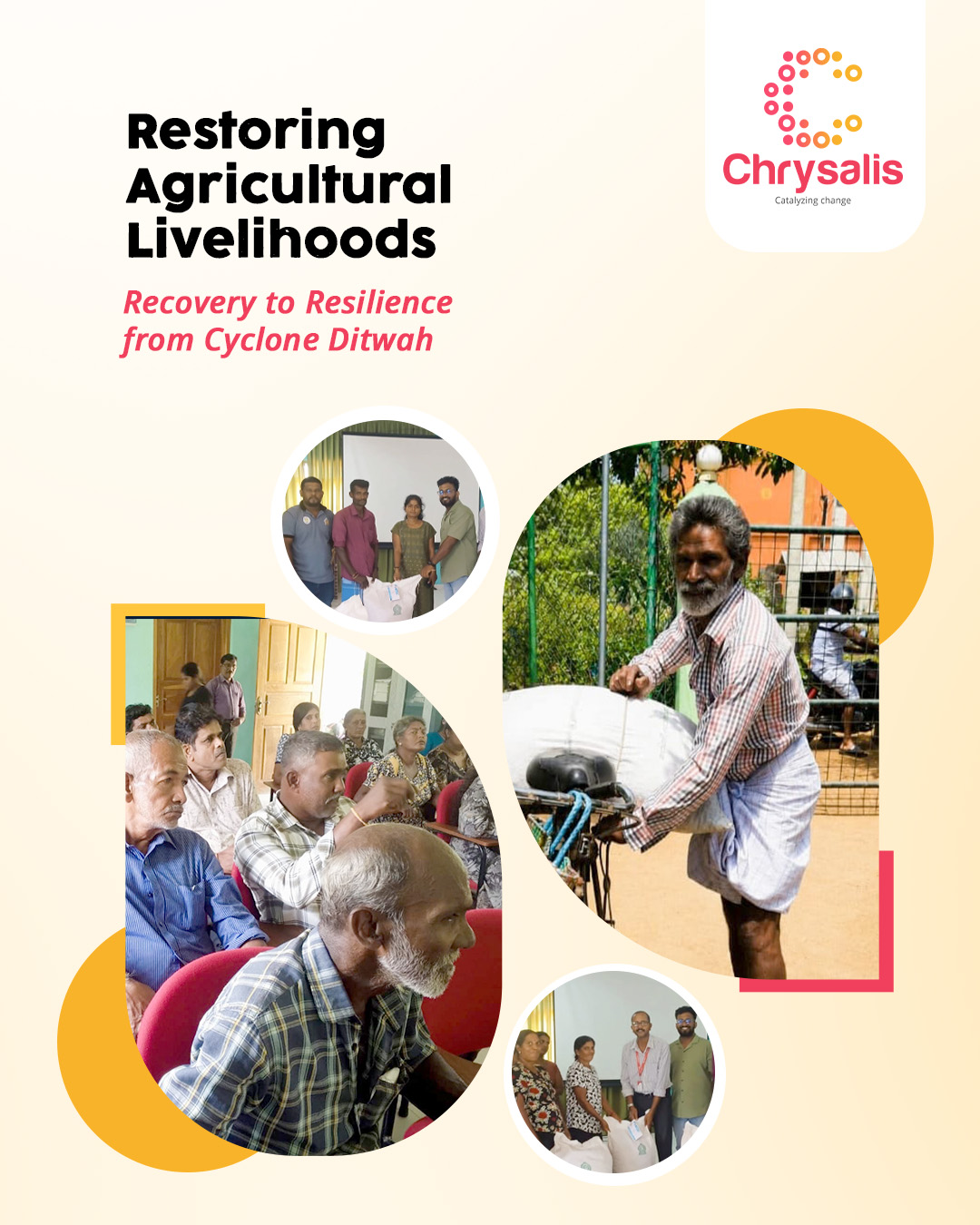
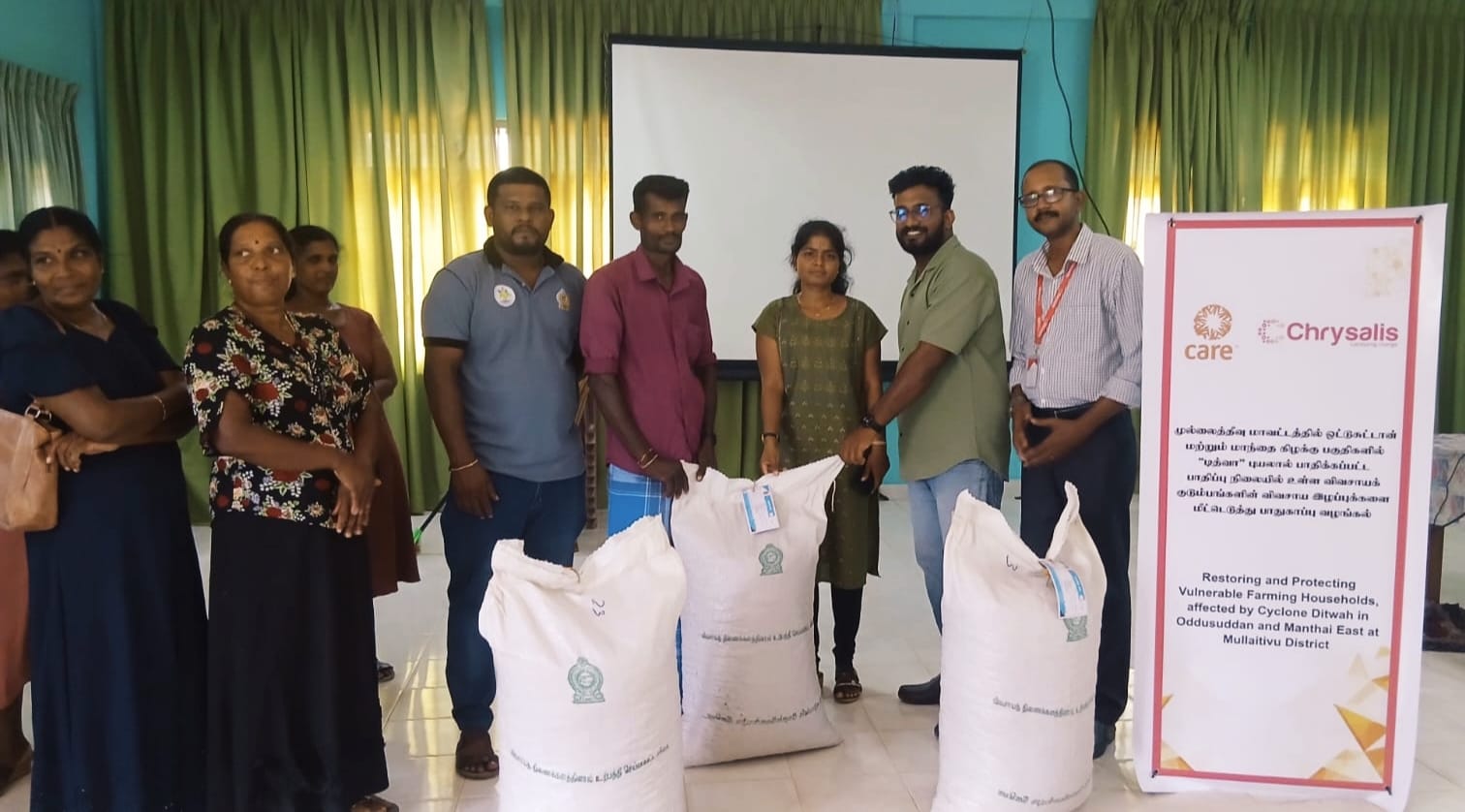
To help bridge the gap between emergency relief and long-term recovery, Chrysalis is implementing the "Restoring and Protecting Vulnerable Farming Households Affected by Cyclone Ditwah in Oddusuddan and Manthai East, Mullaitivu District" project. Working in partnership with the Department of Agriculture and the Divisional Secretariat, the initiative supports farming families who were not reached through immediate government assistance, ensuring that the most vulnerable households are not left behind.
Supporting Farmers to Restart Their Livelihoods
The project aims to restore agricultural livelihoods by providing immediate production inputs while strengthening the capacity of farming communities to adapt to future climate-related challenges.
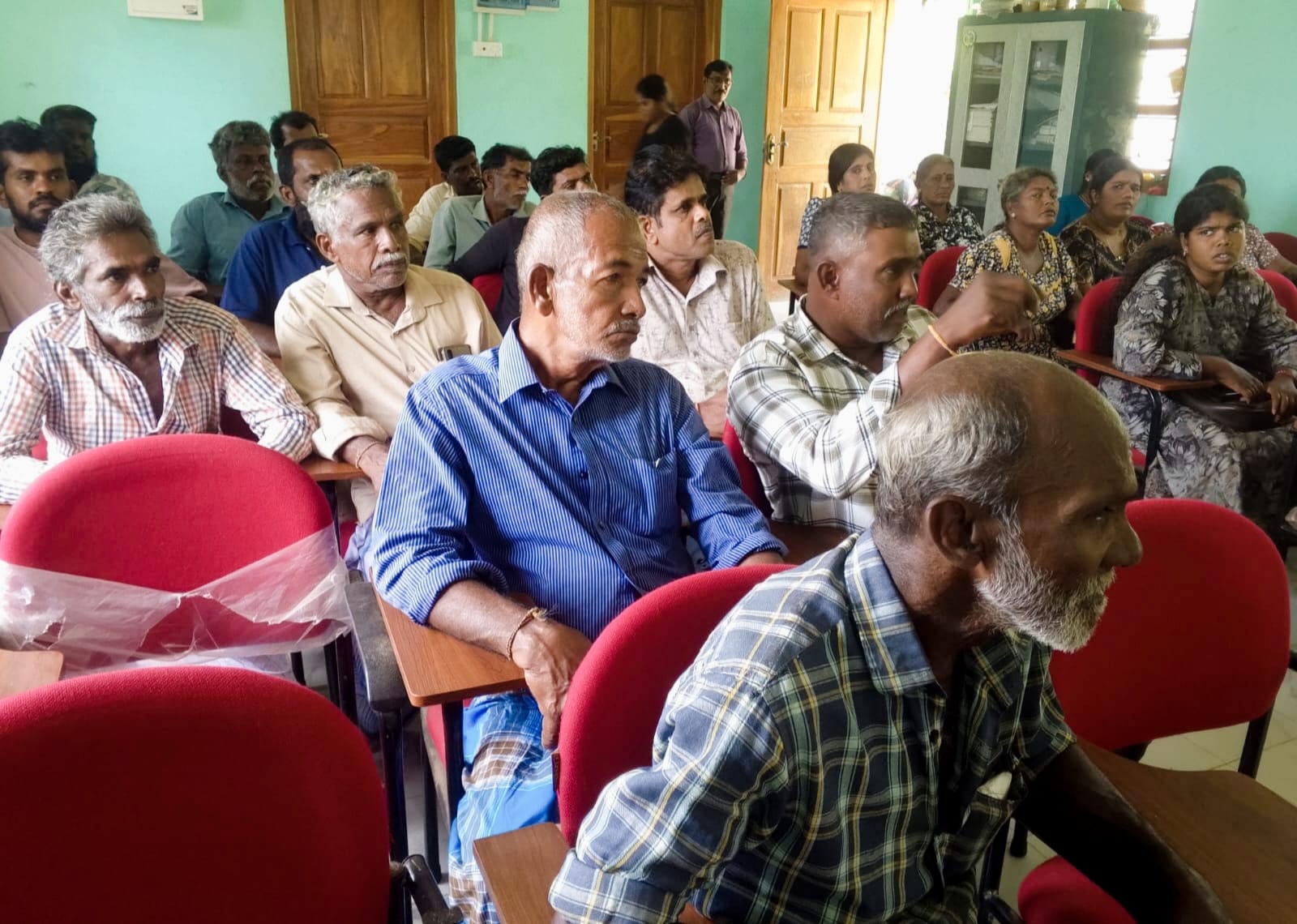
A total of 200 high-priority beneficiaries, including men, women, youth, and persons with disabilities, will receive support through the project. Among them, 90 groundnut farmers will be provided with quality groundnut seeds to resume cultivation, while the remaining beneficiaries will receive support for vegetable farming in the coming weeks.
Groundnut cultivation has been identified as one of the key interventions due to its suitability for the local context and its potential to help farming households quickly re-establish productive livelihoods.
Building Resilience Beyond Recovery
While access to quality seeds enables farmers to restart cultivation, the project also recognizes the importance of preparing communities for future climate shocks.
In addition to input support, farmers will receive technical guidance on climate-smart agricultural practices, including the integration of weather forecasting into crop planning. These interventions aim to strengthen resilience, improve decision-making, and promote more sustainable farming practices that can withstand increasingly unpredictable climate conditions.
Beneficiary selection has been developed in consultation with relevant stakeholders and will be carried out through field verification to ensure a transparent, accountable, and equitable process.
Addressing Longstanding Challenges
The need for this intervention extends beyond the immediate impacts of Cyclone Ditwah.
Manthai East and Oddusuddan are among the most vulnerable areas in Sri Lanka, with communities continuing to experience the long-term effects of the civil war alongside recurring natural disasters. Agriculture remains the primary livelihood for most households, yet farmers face persistent challenges including damaged irrigation infrastructure, erratic rainfall, limited access to quality agricultural inputs, poor market linkages, and inadequate transport infrastructure.
Seasonal flooding from major irrigation tanks frequently damages homes, farmland, and community infrastructure, further disrupting livelihoods and deepening economic vulnerability. In Manthai East, limited connectivity to Mullaitivu town also restricts access to healthcare, education, markets, and essential public services, making recovery even more challenging during emergencies.
Towards Sustainable and Climate-Resilient Livelihoods
By combining immediate agricultural support with climate-smart resilience planning, this project seeks to create a pathway towards long-term livelihood security for vulnerable farming households.
Through partnerships with local government institutions and community stakeholders, Chrysalis is supporting farmers not only to recover from the impacts of Cyclone Ditwah, but also to build stronger, more resilient agricultural systems capable of withstanding future challenges.
As farming families return to their fields with renewed hope, this initiative represents an important step towards restoring livelihoods, strengthening food security, and ensuring that vulnerable communities are better prepared for an increasingly uncertain climate
Other News
Explore more updates and success stories from our ongoing work across Sri Lanka — stories of impact, resilience, and collaboration that shape a more inclusive and equitable future.