Projects

filter icon
FILTER
filter icon

Filter Ongoing Projects

Select Partner(s)

Select Donor(s)

Select Piller

Clear Filter
project thumbnail

Sri Lanka Less Travelled (SLLT)

Explore the unseen beauty of Sri Lanka through a journey that goes beyond traditional tourist trails—one that directly supports community-led eco-tourism, creates inclusive livelihood opportunities, and strengthens the resilience of rural communities.

Across Sri Lanka’s Central Province, rural communities are surrounded by extraordinary natural landscapes, rich biodiversity, and deeply rooted cultural heritage. Despite this abundance, many of these areas remain largely disconnected from mainstream tourism and formal economic systems. Tourism in Sri Lanka has long been concentrated in a handful of well-established destinations, leaving emerging locations with limited infrastructure, low visibility, and weak access to markets.

The impact of the COVID-19 pandemic further intensified these challenges. As the tourism sector came to a standstill, communities that relied on informal and seasonal income sources faced severe economic shocks. The crisis highlighted the vulnerability of rural livelihoods and exposed long-standing structural gaps, including the lack of diversified income opportunities, limited access to finance, and weak integration into formal value chains.

At the same time, local micro, small, and medium enterprises (MSMEs) continue to operate in isolation, often without the necessary business development support, market linkages, or capacity to scale. Women and youth, in particular, face significant barriers to entering and benefiting from economic activities, further deepening inequalities within these communities. As a result, valuable local assets remain underutilised, incomes remain low and unstable, and community resilience continues to be undermined.

Without a coordinated and integrated approach that connects tourism recovery with enterprise development, these rural destinations struggle to transform their potential into sustainable and long-term economic opportunities.

It is within this context that Sri Lanka Less Travelled was designed as a transformative, community-driven eco-tourism initiative. The project aims to unlock the untapped potential of rural destinations in the Central Province by reimagining tourism as a tool for inclusive and sustainable development.

Rather than following conventional models, the initiative promotes a new vision of tourism—one that is decentralised, environmentally responsible, and rooted in community ownership. It seeks to position rural communities not as passive participants, but as active drivers of local economic growth.

By integrating eco-tourism development with livelihood strengthening and MSME support, Sri Lanka Less Travelled creates complete, functioning local economies around tourism. It enables communities to develop and manage their own destinations, while also equipping local entrepreneurs, particularly women and youth, with the skills, resources, and opportunities needed to actively participate in and benefit from the tourism value chain.

Ultimately, the project contributes to building more resilient rural economies, where income is diversified, opportunities are inclusive, and development is both locally driven and environmentally sustainable.


Read More
project thumbnail

Multi-Actor Partnership for Pro-Poor and Gender-Equitable Climate Risk Financing in the Context of the IGP’s 2025 Vision

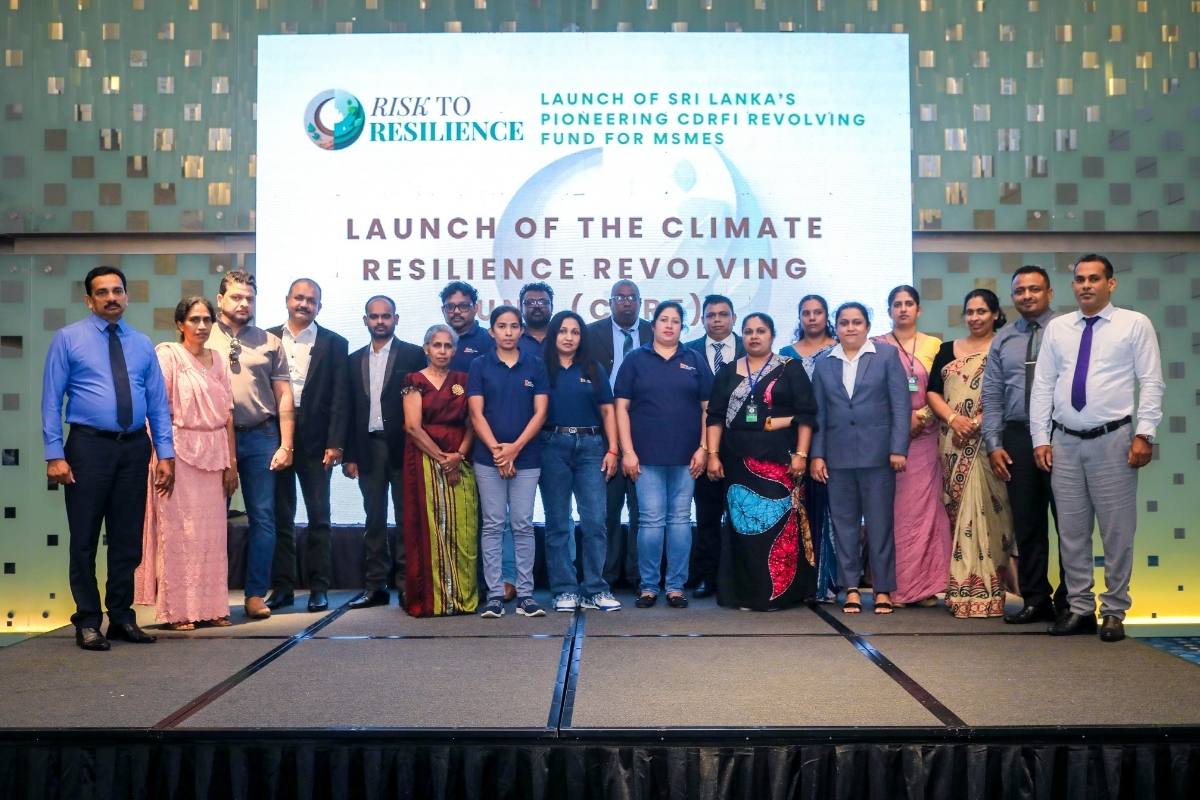
The Multi-Actor Partnership for Pro-Poor and Gender-Equitable Climate Risk Financing in the Context of the IGP’s 2025 Vision project seeks to advance inclusive and equitable climate risk financing in Sri Lanka by fostering collaboration among government institutions, private sector actors, financial service providers, and civil society. In the face of increasing climate-related shocks—including floods, droughts, and extreme weather events—the project recognises that women and marginalised communities are disproportionately affected due to limited access to resources, information, and financial protection mechanisms. It therefore prioritises ensuring that climate financing systems are accessible, affordable, and responsive to the needs of those most at risk.

Aligned with the Insurance Growth Plan (IGP) 2025 Vision, the project supports the design, development, and uptake of inclusive risk financing solutions, including insurance products and broader financial protection mechanisms tailored to low-income and underserved populations. It promotes the integration of gender and equity considerations into national and sectoral frameworks, while strengthening coordination between key stakeholders to create a more enabling environment for inclusive climate finance.

Implemented by Chrysalis with support from CARE Deutschland-Luxemburg and BMZ, the project adopts a systems-strengthening approach that bridges policy, institutions, and communities. It generates evidence on climate vulnerabilities, builds the capacity of financial and insurance actors to develop gender-responsive products, and amplifies community voices—particularly those of women—to influence decision-making processes. Through these efforts, the project contributes to strengthening disaster risk governance and enhancing financial resilience at both community and institutional levels, ultimately supporting a more inclusive, adaptive, and resilient financial ecosystem in Sri Lanka.

Read More
project thumbnail

Sustainable Agriculture Project – Expanding Farmer Field Business School (FFBS) in Northern Districts of Sri Lanka

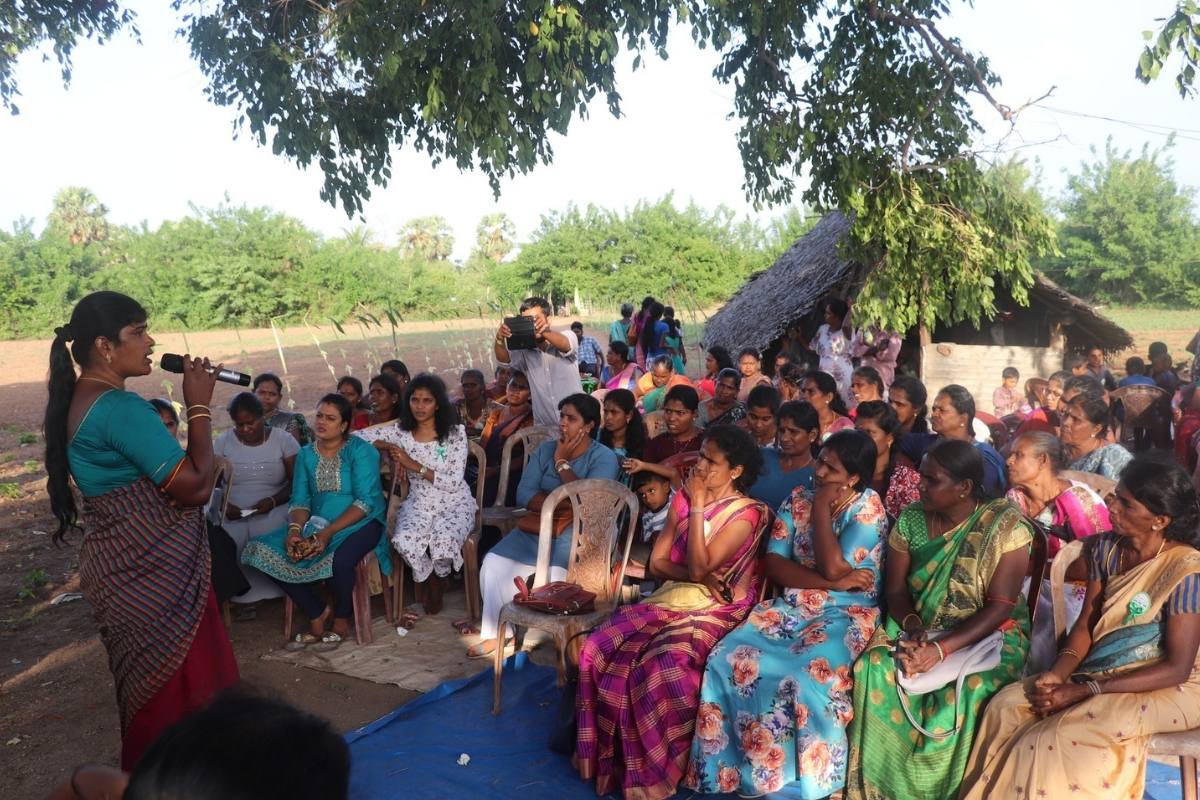
The Farmer Field and Business School (FFBS) project strengthens agricultural skills, promotes climate-smart techniques, empowers women, and builds livelihood resilience through improved market access. Structured around the SuPER principles: sustainable, productive, efficient, and resilient agricultural systems—the project combines hands-on learning, gender-transformative strategies, and market engagement to enhance livelihoods. Lead-farmers facilitate demonstration plots, providing practical training in climate-smart practices, while government extension services offer technical support to ensure long-term sustainability.

Smallholder farmers, particularly women, face multiple barriers that trap them in cycles of poverty and food insecurity. Limited access to modern agricultural training leads to low crop yields and inefficient farming practices. These challenges are further compounded by climate change, as unpredictable weather patterns and environmental degradation threaten livelihoods that farmers often lack the knowledge or resources to protect.

To address these challenges, the project provides comprehensive support beyond production. Farmers gain access to market linkages, produce aggregation, and value addition activities such as processing and packaging. Village Savings and Loan Associations (VSLA) enhance financial resilience, while gender barriers are actively addressed by improving women’s access to land, inputs, credit, and decision-making within households. This holistic approach fosters adaptive, resilient, and thriving farming communities.

Read More
filter icon
FILTER
filter icon

Filter Completed Projects

Select Partner(s)

Select Donor(s)

Select Piller

Clear Filter
project thumbnail

Sri Lanka Less Travelled (SLLT)

Explore the unseen beauty of Sri Lanka through a journey that goes beyond traditional tourist trails—one that directly supports community-led eco-tourism, creates inclusive livelihood opportunities, and strengthens the resilience of rural communities.

Across Sri Lanka’s Central Province, rural communities are surrounded by extraordinary natural landscapes, rich biodiversity, and deeply rooted cultural heritage. Despite this abundance, many of these areas remain largely disconnected from mainstream tourism and formal economic systems. Tourism in Sri Lanka has long been concentrated in a handful of well-established destinations, leaving emerging locations with limited infrastructure, low visibility, and weak access to markets.

The impact of the COVID-19 pandemic further intensified these challenges. As the tourism sector came to a standstill, communities that relied on informal and seasonal income sources faced severe economic shocks. The crisis highlighted the vulnerability of rural livelihoods and exposed long-standing structural gaps, including the lack of diversified income opportunities, limited access to finance, and weak integration into formal value chains.

At the same time, local micro, small, and medium enterprises (MSMEs) continue to operate in isolation, often without the necessary business development support, market linkages, or capacity to scale. Women and youth, in particular, face significant barriers to entering and benefiting from economic activities, further deepening inequalities within these communities. As a result, valuable local assets remain underutilised, incomes remain low and unstable, and community resilience continues to be undermined.

Without a coordinated and integrated approach that connects tourism recovery with enterprise development, these rural destinations struggle to transform their potential into sustainable and long-term economic opportunities.

It is within this context that Sri Lanka Less Travelled was designed as a transformative, community-driven eco-tourism initiative. The project aims to unlock the untapped potential of rural destinations in the Central Province by reimagining tourism as a tool for inclusive and sustainable development.

Rather than following conventional models, the initiative promotes a new vision of tourism—one that is decentralised, environmentally responsible, and rooted in community ownership. It seeks to position rural communities not as passive participants, but as active drivers of local economic growth.

By integrating eco-tourism development with livelihood strengthening and MSME support, Sri Lanka Less Travelled creates complete, functioning local economies around tourism. It enables communities to develop and manage their own destinations, while also equipping local entrepreneurs, particularly women and youth, with the skills, resources, and opportunities needed to actively participate in and benefit from the tourism value chain.

Ultimately, the project contributes to building more resilient rural economies, where income is diversified, opportunities are inclusive, and development is both locally driven and environmentally sustainable.
Read More
project thumbnail

Multi-Actor Partnership for Pro-Poor and Gender-Equitable Climate Risk Financing in the Context of the IGP’s 2025 Vision

The Multi-Actor Partnership for Pro-Poor and Gender-Equitable Climate Risk Financing in the Context of the IGP’s 2025 Vision project seeks to advance inclusive and equitable climate risk financing in Sri Lanka by fostering collaboration among government institutions, private sector actors, financial service providers, and civil society. In the face of increasing climate-related shocks—including floods, droughts, and extreme weather events—the project recognises that women and marginalised communities are disproportionately affected due to limited access to resources, information, and financial protection mechanisms. It therefore prioritises ensuring that climate financing systems are accessible, affordable, and responsive to the needs of those most at risk.

Aligned with the Insurance Growth Plan (IGP) 2025 Vision, the project supports the design, development, and uptake of inclusive risk financing solutions, including insurance products and broader financial protection mechanisms tailored to low-income and underserved populations. It promotes the integration of gender and equity considerations into national and sectoral frameworks, while strengthening coordination between key stakeholders to create a more enabling environment for inclusive climate finance.

Implemented by Chrysalis with support from CARE Deutschland-Luxemburg and BMZ, the project adopts a systems-strengthening approach that bridges policy, institutions, and communities. It generates evidence on climate vulnerabilities, builds the capacity of financial and insurance actors to develop gender-responsive products, and amplifies community voices—particularly those of women—to influence decision-making processes. Through these efforts, the project contributes to strengthening disaster risk governance and enhancing financial resilience at both community and institutional levels, ultimately supporting a more inclusive, adaptive, and resilient financial ecosystem in Sri Lanka.

Read More
project thumbnail

Sustainable Agriculture Project – Expanding Farmer Field Business School (FFBS) in Northern Districts of Sri Lanka

The Farmer Field and Business School (FFBS) project strengthens agricultural skills, promotes climate-smart techniques, empowers women, and builds livelihood resilience through improved market access. Structured around the SuPER principles: sustainable, productive, efficient, and resilient agricultural systems—the project combines hands-on learning, gender-transformative strategies, and market engagement to enhance livelihoods. Lead-farmers facilitate demonstration plots, providing practical training in climate-smart practices, while government extension services offer technical support to ensure long-term sustainability.

Smallholder farmers, particularly women, face multiple barriers that trap them in cycles of poverty and food insecurity. Limited access to modern agricultural training leads to low crop yields and inefficient farming practices. These challenges are further compounded by climate change, as unpredictable weather patterns and environmental degradation threaten livelihoods that farmers often lack the knowledge or resources to protect.

To address these challenges, the project provides comprehensive support beyond production. Farmers gain access to market linkages, produce aggregation, and value addition activities such as processing and packaging. Village Savings and Loan Associations (VSLA) enhance financial resilience, while gender barriers are actively addressed by improving women’s access to land, inputs, credit, and decision-making within households. This holistic approach fosters adaptive, resilient, and thriving farming communities.

Read More
filter icon
FILTER
filter icon

Filter Upcoming Projects

Select Partner(s)

Select Donor(s)

Select Piller

Clear Filter
project thumbnail

Sri Lanka Less Travelled (SLLT)

Explore the unseen beauty of Sri Lanka through a journey that goes beyond traditional tourist trails—one that directly supports community-led eco-tourism, creates inclusive livelihood opportunities, and strengthens the resilience of rural communities.

Across Sri Lanka’s Central Province, rural communities are surrounded by extraordinary natural landscapes, rich biodiversity, and deeply rooted cultural heritage. Despite this abundance, many of these areas remain largely disconnected from mainstream tourism and formal economic systems. Tourism in Sri Lanka has long been concentrated in a handful of well-established destinations, leaving emerging locations with limited infrastructure, low visibility, and weak access to markets.

The impact of the COVID-19 pandemic further intensified these challenges. As the tourism sector came to a standstill, communities that relied on informal and seasonal income sources faced severe economic shocks. The crisis highlighted the vulnerability of rural livelihoods and exposed long-standing structural gaps, including the lack of diversified income opportunities, limited access to finance, and weak integration into formal value chains.

At the same time, local micro, small, and medium enterprises (MSMEs) continue to operate in isolation, often without the necessary business development support, market linkages, or capacity to scale. Women and youth, in particular, face significant barriers to entering and benefiting from economic activities, further deepening inequalities within these communities. As a result, valuable local assets remain underutilised, incomes remain low and unstable, and community resilience continues to be undermined.

Without a coordinated and integrated approach that connects tourism recovery with enterprise development, these rural destinations struggle to transform their potential into sustainable and long-term economic opportunities.

It is within this context that Sri Lanka Less Travelled was designed as a transformative, community-driven eco-tourism initiative. The project aims to unlock the untapped potential of rural destinations in the Central Province by reimagining tourism as a tool for inclusive and sustainable development.

Rather than following conventional models, the initiative promotes a new vision of tourism—one that is decentralised, environmentally responsible, and rooted in community ownership. It seeks to position rural communities not as passive participants, but as active drivers of local economic growth.

By integrating eco-tourism development with livelihood strengthening and MSME support, Sri Lanka Less Travelled creates complete, functioning local economies around tourism. It enables communities to develop and manage their own destinations, while also equipping local entrepreneurs, particularly women and youth, with the skills, resources, and opportunities needed to actively participate in and benefit from the tourism value chain.

Ultimately, the project contributes to building more resilient rural economies, where income is diversified, opportunities are inclusive, and development is both locally driven and environmentally sustainable.

Read More
project thumbnail

Multi-Actor Partnership for Pro-Poor and Gender-Equitable Climate Risk Financing in the Context of the IGP’s 2025 Vision

The Multi-Actor Partnership for Pro-Poor and Gender-Equitable Climate Risk Financing in the Context of the IGP’s 2025 Vision project seeks to advance inclusive and equitable climate risk financing in Sri Lanka by fostering collaboration among government institutions, private sector actors, financial service providers, and civil society. In the face of increasing climate-related shocks—including floods, droughts, and extreme weather events—the project recognises that women and marginalised communities are disproportionately affected due to limited access to resources, information, and financial protection mechanisms. It therefore prioritises ensuring that climate financing systems are accessible, affordable, and responsive to the needs of those most at risk.

Aligned with the Insurance Growth Plan (IGP) 2025 Vision, the project supports the design, development, and uptake of inclusive risk financing solutions, including insurance products and broader financial protection mechanisms tailored to low-income and underserved populations. It promotes the integration of gender and equity considerations into national and sectoral frameworks, while strengthening coordination between key stakeholders to create a more enabling environment for inclusive climate finance.

Implemented by Chrysalis with support from CARE Deutschland-Luxemburg and BMZ, the project adopts a systems-strengthening approach that bridges policy, institutions, and communities. It generates evidence on climate vulnerabilities, builds the capacity of financial and insurance actors to develop gender-responsive products, and amplifies community voices—particularly those of women—to influence decision-making processes. Through these efforts, the project contributes to strengthening disaster risk governance and enhancing financial resilience at both community and institutional levels, ultimately supporting a more inclusive, adaptive, and resilient financial ecosystem in Sri Lanka.

Read More
project thumbnail

Sustainable Agriculture Project – Expanding Farmer Field Business School (FFBS) in Northern Districts of Sri Lanka

The Farmer Field and Business School (FFBS) project strengthens agricultural skills, promotes climate-smart techniques, empowers women, and builds livelihood resilience through improved market access. Structured around the SuPER principles: sustainable, productive, efficient, and resilient agricultural systems—the project combines hands-on learning, gender-transformative strategies, and market engagement to enhance livelihoods. Lead-farmers facilitate demonstration plots, providing practical training in climate-smart practices, while government extension services offer technical support to ensure long-term sustainability.

Smallholder farmers, particularly women, face multiple barriers that trap them in cycles of poverty and food insecurity. Limited access to modern agricultural training leads to low crop yields and inefficient farming practices. These challenges are further compounded by climate change, as unpredictable weather patterns and environmental degradation threaten livelihoods that farmers often lack the knowledge or resources to protect.

To address these challenges, the project provides comprehensive support beyond production. Farmers gain access to market linkages, produce aggregation, and value addition activities such as processing and packaging. Village Savings and Loan Associations (VSLA) enhance financial resilience, while gender barriers are actively addressed by improving women’s access to land, inputs, credit, and decision-making within households. This holistic approach fosters adaptive, resilient, and thriving farming communities.

Read More
filter icon

Filter Ongoing Projects

Select Partner(s)

Select Donor(s)

Select Pillar

Clear Filter