"Third Act" Short Film Competition and Festival 2026

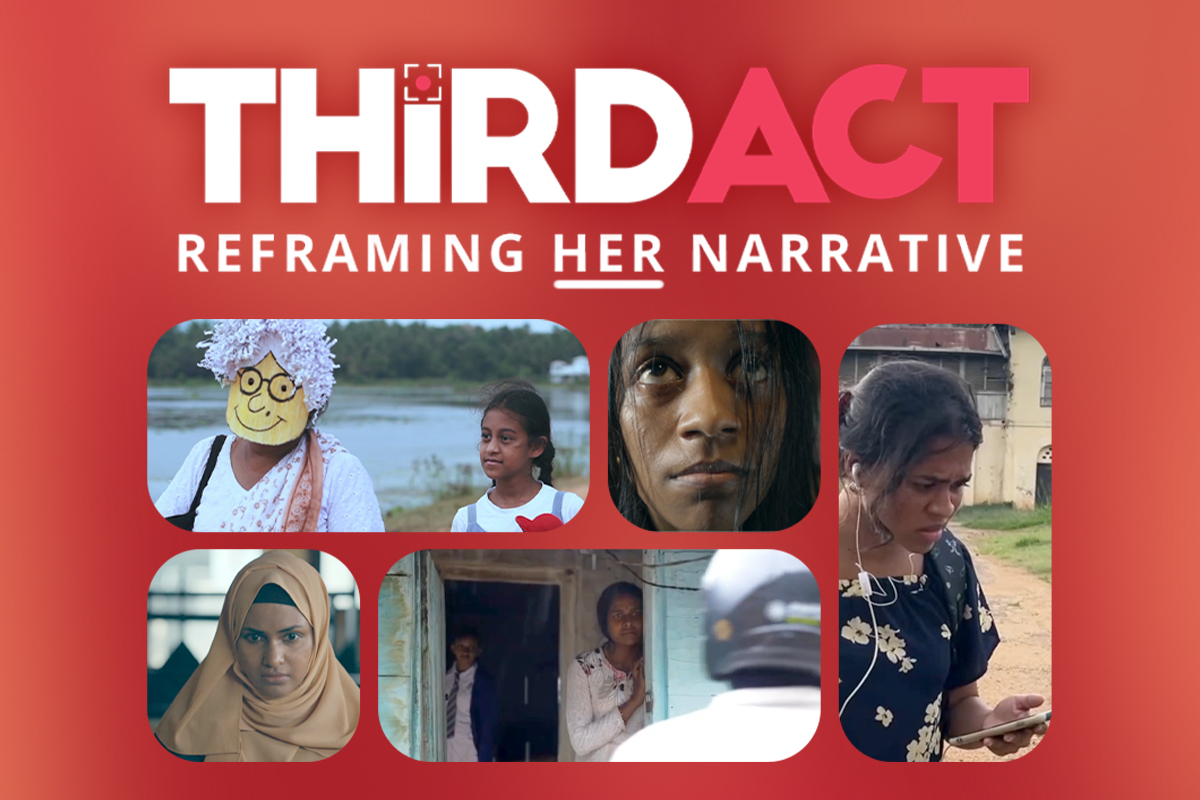
Third Act, a short festival organized by Chrysalis together with our partners for International Women’s Day. We recognize storytelling as a powerful medium to spark dialogue, challenge social norms, and highlight the lived realities of women across the Sri Lanka, through short films.
This festival brings together creative talent from short film directors, videographers, university students and emerging talent to share ‘Her’ narratives across diverse multi-cultural perspectives.
This year’s International Women's Day theme focuses on “Rights. Justice. Action. For ALL Women and Girls”. However, we open this theme for creative exploration with the power of discourse and shared perspectives towards building progressive and inclusive futures through collective action.

SUBMIT YOUR SHORT FILM
THEMES
With your tools for storytelling, here are six themes you can explore through your lens to bring ‘Her’ narrative to focus.
- Economic Justice and Financial Independence
- Leadership, Political Participation and Decision-Making
- Freedom from Violence and Access to Justice
- Care Work, Labor and Shared Responsibilities
- Equality, Inclusion and Representation
- Climate-induced Conflict and Women
- Economic Justice and Financial Independence
Many women face barriers that prevent them from becoming financially independent. Limited access to finance for Micro, Small and Medium Enterprises, low financial literacy, restricted market access, and lack of opportunities make it difficult for women to expand their businesses. Without proper resources and support, securing a stable future becomes challenging. Economic justice means removing these barriers and ensuring women have fair access to opportunities, income and long-term security. - Leadership, Political Participation and Decision-Making
Women’s leadership brings diversity and fairness to governance and community decisions. When women are included in councils, political spaces and community discussions, decisions reflect real needs and shared voices. However, gender bias often sidelines women, and their voices are overlooked in public institutions, community forums and even within families. When women are empowered to lead and participate fully, meaningful and lasting change happens. - Freedom from Violence and Access to Justice
Gender-based violence harms not only individuals but families, communities and economies. Women experience physical, emotional, psychological and digital abuse, as well as social pressure and control. This leads to fear, silence, shame and loss of confidence. Lack of open discussion about Intimate Partner Violence causes further denial and discrimination. Women need access to justice, support systems, safe spaces and strong networks to regain their voice, safety and identity. Promoting gender justice is urgent and necessary. - Care Work, Labor and Shared Responsibilities
Women carry a large share of unpaid care work. This includes cooking, cleaning, childcare, elder care, household management and community support. Much of this work is expected of women because of stereotypes rather than choice. If women stopped doing this work, families and economies would struggle to function. Recognizing and sharing care responsibilities is essential to building equal and fair societies. - Equality, Inclusion and Representation
Women’s rights, gender equality, disability inclusion and proper representation are essential for a progressive society. When women and marginalized groups are included in leadership and decision-making, outcomes improve for everyone. Equality gives women dignity, agency and opportunities to grow. Inclusion ensures that development benefits all, not just a few. Representation must be meaningful, integrative and inclusive. - Climate-induced Conflict and Women
Climate change affects women and children the most. Unequal access to resources, exclusionary leadership systems and limited decision-making power leave women more vulnerable during climate crises. As resources become scarce, tensions increase within communities causing conflict. Recognizing women’s leadership and ensuring equal participation in climate response can reduce conflict and strengthen social unity. Gender equality must be part of climate solutions.
SEND YOUR SUBMISSION
Submission deadline: extended to 15th of April 2026
Click here for the Short Film Competition Details >
To submit, click HERE
Submission must include:
- Film title
- Short Film (20 min. maximum duration)
- Director’s name and contact details
- Short synopsis (maximum 250 words)
- Director’s statement (maximum 200 words)
- Google drive link to the film (view access enabled)
- Short film must be applicable to the themes of the short film festival
Eligibility criteria:
Open to Sri Lankan filmmakers (individuals or teams)
Maximum duration of the film is 20 minutes
Genre of the short film:
- Fiction
- Documentary
- Animation
- Narrative
- Experimental
- Fiction
Language: Sinhala, Tamil or English
Must include English subtitles if in Sinhala or Tamil language.
GUIDELINES
- Film must not contain hate speech, discriminatory content or incitement to violence.
- Sensitive topics must be handed responsibly and ethically.
- Consent must be obtained for all participants featured.
- Copyrighted visuals and sound must have authorization
- AI-generated content must be declared, if used.
FURTHER INFORMATION
We look forward to receiving your submission and to your participation in the festival.
For more information, inquiries and assistance, please contact us via email at media@chrysaliscatalyz.com
Other Events
Discover past events and key moments from Chrysalis’ journey — national dialogues, capacity-building sessions, and community gatherings that continue to strengthen our mission of advancing equality and resilience across Sri Lanka.