Case Studies

Other Case Studies

case study thumbnail

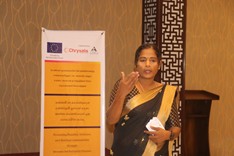
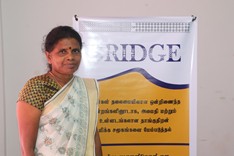
Speaking Through Barriers: A Woman Social Media Actor’s Journey in Mannar

Women local leaders and human rights defenders in Northern Sri Lanka routinely face steep obstacles, ranging from deeply entrenched patriarchal gender norms at home to public character attacks. In today's digital age, these barriers increasingly manifest as targeted online harassment and cyber harassment campaigns designed to intimidate women and silence their public voice.

For Mary Alan Arthi Valentine Kanchan, a 42-year-old activist from Jimron Nagar in Mannar District, overcoming these challenges required transforming digital threats into actionable advocacy. Supported by Chrysalis through the BRIDGE Project and earlier initiatives, Arthi has emerged as the President of the Mannar CSO Federation, a digital safety advocate, and a local government candidate.

The Challenge: Compounding Social Norms and Cyber Threats

Arthi’s journey into social activism met severe resistance early on. Challenging traditional gender roles brought intense criticism, domestic friction, and social pressure from extended family attempting to force her compliance and exit from public life.

When she stood her ground and continued advocating against institutional inertia, the resistance escalated into targeted online harassment. False rumors and defamatory social media posts were circulated to destroy her reputation and intimidate her family. In Mannar District, accessing digital safety and legal redress is particularly difficult because cybercrime complaints are primarily handled by the Cyber Crime Division in Jaffna—geographically and institutionally distant from rural women activists.

Strategic Interventions: Digital Advocacy, Legal Action, and Civic Mobilization

Through Chrysalis and the BRIDGE Project, Arthi built a powerful toolkit combining leadership, ICT skills, and human rights advocacy:

Digital Safety & Cybercrime Reporting: Completed comprehensive training in data protection, password security, mobile communication, and the Online Safety Act. When targeted by defamatory online attacks, she gathered evidence and formally reported the issue to the Cyber Crime Division in Jaffna, the Legal Aid Commission, and women’s rights organizations, securing a full resolution within one week.

Cascading Community Awareness: Conducted digital safety and online security awareness sessions for community-based organization (CBO) members, mothers, and women across her village to build grassroots digital resilience.

Ministerial and High-Level Advocacy: Engaged directly with the Minister of Women and Child Affairs alongside CSO representatives to highlight the cyber safety and digital threats faced by women leaders across the Northern Province, prompting commitments for coordinated police and state action.

Economic & Rights-Based Leadership: Initiated a home garden initiative for survivors of gender-based violence (GBV) to build economic independence. Additionally, she sparked a public protest against beneficiary discrimination in state welfare schemes, inspiring similar rights-based movements in neighboring districts.

"I realized that to create real change in the community, I first had to transform my own family. By challenging norms within my household, I could pave the way for leadership... Through the BRIDGE Project, I learned how to respond to cyber harassment, report online abuse, and guide other women on digital safety and security."

Mary Alan Arthi, President, Mannar CSO Federation

Measurable Results and Community Impact

Arthi’s courage and technical capacity have translated into systemic, multi-sector outcomes:

Elected Leadership: Thrice elected President of the Mannar CSO Federation (2021, 2023, and 2025), unifying 40 civil society organizations across the district.

Political Empowerment: Nominated to contest in local government elections, breaking structural barriers around women's political participation.

Rapid Legal Redress: Successfully demonstrated that digital safety training enables women activists to achieve swift legal resolution against online abuse.

District-Wide Public Forums: Organized multi-stakeholder town hall sessions with local and provincial authorities addressing land disputes, GBV, public property issues, and environmental protection.

Looking Ahead: Securing Women’s Public Voice

Arthi’s journey shows that equipping women leaders with digital safety tools and rights-based training turns personal resistance into widespread public impact. By establishing clear reporting pathways and advocating at national levels, the BRIDGE Project ensures that women can speak through barriers and shape the future of their communities safely.

View Case Study
case study thumbnail

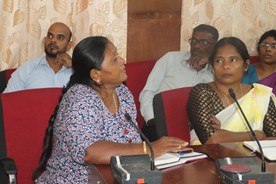
Using Rights Knowledge to Defend Fisheries, Environment, and Women’s Dignity: Reeta Vasanthi’s Journey in Mannar

In the coastal fishing communities of Mannar District, local livelihoods are under threat from illegal bottom-trawling by Indian vessels and unaddressed environmental concerns surrounding large-scale projects like wind farms. Simultaneously, deeply ingrained social norms marginalize vulnerable groups—particularly widows and persons with disabilities—excluding them from public leadership and community life.

Reeta Vasanthi Kathiramalai, a 65-year-old widow, person with a disability, and head of household from Jimron Nagar, has transformed these intersecting challenges into a platform for rights-based advocacy. Supported by Chrysalis through the BRIDGE Project and earlier capacity-building initiatives, Reeta has emerged as a national and regional leader for fisheries justice, disability rights, and women’s dignity.

The Challenge: Resource Conflicts, Social Exclusion, and Environmental Threats

Small-scale coastal communities in Jimron Nagar face a constellation of systemic issues:

Fisheries & Livelihood Destruction: Illegal Indian trawlers destroy marine ecosystems and local fishing gear, directly threatening small-scale fishermen and women involved in dry fish processing.

Unaddressed Environmental Concerns: Local residents faced difficulties formally raising environmental and community impacts of the Mannar windmill project due to a lack of governance and legal advocacy pathways.

Deeply Entrenched Norms against Widows: Widowed for 15 years, Reeta experienced severe social exclusion. Cultural norms barred widows from wearing the pottu (forehead spot) and treated them as "unlucky," excluding them from weddings and cultural rituals.

Intersectional Exclusion: Living with a disability and adapting her livelihood from dry fish production to sewing, Reeta lacked the institutional pathways and legal tools needed to structure grassroots grievances into rights-based demands.

Strategic Interventions: Rights-Based Advocacy and Cross-Border Networks

Through Chrysalis, the TRANSFORM Project, and the BRIDGE Project, Reeta completed comprehensive training in human rights, governance, leadership, and conflict sensitivity, deploying these skills across multiple sectors:

Cross-Border Fisheries Advocacy: Extended her advocacy beyond local forums to build cross-border civil society networks across countries, highlighting the systemic impact of bottom-trawling and demanding sustainable marine resource governance.

Challenging Discriminatory Norms: Made the deliberate personal decision to wear the pottu despite intense community pressure, transforming a visible mark of exclusion into an act of dignity and social norm resistance.

Community Legal Referral Resource: Functions as a grassroots legal gateway in Mannar, connecting victims of domestic violence, land disputes, and human rights violations with legal aid organizations and lawyers.

Multi-Organizational Leadership: Serves as President of the National Fisheries Solidarity Movement (NAFSO) for Colombo and Mannar, President of the Mannar District Disability Association (Velicham), and President of the Emil Nagar Women’s Rural Development Society (WRDS).

"The ill-treatment of a widow is considered as a social norm in my society... The empowerment created by Chrysalis gave me the strength to face the criticism of my community for keeping the 'spot'. Now I look more beautiful when I see the mirror. I am now confident in myself for challenging society for the discrimination against women."

Reeta Vasanthi Kathiramalai, President, NAFSO & Mannar District Disability Association (Velicham)

Measurable Results and Intersectional Impact

Reeta’s applied leadership has achieved concrete community and structural results:

Sustained Institutional Platforms: Mobilizes grassroots voices through leadership roles across NAFSO, Velicham, and the local WRDS, securing representation for disabled persons and fisherfolk in governance discussions.

Environmental & Maritime Voice: Formally articulated community grievances regarding windmill projects and Indian trawlers in public protests, policy dialogues, and international civil society forums.

Reclaiming Widow Dignity: Inspired other widows across nearby villages to resist discriminatory cultural practices and participate actively in public life.

Grassroots Awareness & Protection: Regularly conducts community sessions on gender-based violence (GBV), disability rights, and legal protection across Mannar District.

Looking Ahead: Amplifying Marginalized Voices

Reeta Vasanthi’s journey demonstrates how equipping leaders facing multiple forms of marginalization creates powerful, multi-sector ripple effects. By linking rights-based training to fisheries, disability rights, and social norm change, the BRIDGE Project ensures that community development leaves no one behind.

View Case Study
case study thumbnail

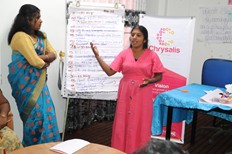
Land as an Economic Resource: Ranisla’s Push for Equal Access in Mullaitivu

In Sri Lanka’s post-war context, access to agricultural land is directly tied to economic independence, food security, and long-term community recovery. For war-affected communities in remote areas like Mullaitivu District, severe land scarcity limits families to day-labor work, entrenching cycles of poverty.

In Arumugathankulam, a small agricultural village in Kumulamunai, around 127 families returned from civil war displacement only to find themselves restricted to plots of one acre or less—insufficient for sustainable paddy or field crop farming. Ranisla, a local community leader and former Local Council Member, has spearheaded a multi-year advocacy campaign using rights-based mechanisms to secure agricultural land access for displaced and land-poor families.

The Challenge: Post-War Displacement, Abandoned Land, and Structural Barriers

The agricultural potential of Arumugathankulam remains heavily constrained despite its proximity to the Thannimurippu Tank water resources. The situation is closely tied to the neighboring village of Andankulam, historically a traditional Tamil farming village. In 1984, military operations forced Andankulam’s entire population—around 40 families—to flee, leaving its rich agricultural land abandoned and overgrown for over four decades.

Families displaced from Andankulam settled in Arumugathankulam without adequate land to resume farming. Without formal land release and official allocation mechanisms, these war-affected households remained dependent on low-wage daily labor, unable to build sustainable economic futures.

Strategic Interventions: Right to Information and Multi-Level Advocacy

Supported by Chrysalis through the TRANSFORM Project and the BRIDGE Programme, Ranisla transformed a historical resettlement grievance into a structured, rights-based economic claim:

Multi-Level Representation: Beginning in 2019, Ranisla submitted formal written requests to the Maritimepattu Divisional Secretary and advocated directly before the Governor of the Northern Province and Divisional Coordination Committee (DCC) forums.

RTI as an Accountability Tool: Filed strategic Right to Information (RTI) applications to obtain official documentation regarding land release status. This established a paper trail that converted institutional assurances into binding public commitments.

BRIDGE Town Hall Platforms: Utilized town hall sessions under the BRIDGE Programme to bring visibility to the landlessness of Arumugathankulam and Andankulam families before key state decision-makers.

Systematic Administrative Follow-Up: Maintained continuous institutional pressure across six years to ensure the bureaucratic process moved from policy discussions to formal government surveying.

"We waited more than forty years for this land. We are still waiting—but now we know the wait has an end... Through the Town Hall sessions and RTI, we placed our needs on the official record. That record cannot be erased, and we will follow it until the land is in our hands."

Ranisla, Community Representative & Former Local Council Member

Measurable Results: Unlocking 67 Hectares for Livelihood Recovery

Ranisla’s persistent, multi-channel campaign has delivered direct, verifiable institutional progress:

Land Release Achieved (2023): Following sustained advocacy, the Department of Wildlife formally initiated the release of 67 hectares of land in Andankulam village that had been inaccessible for more than 42 years.

Formal Land Survey (2024): The Department of Survey completed the official boundary survey for the 67-hectare area.

Survey Plan Submission & Distribution Process (2025): The official survey plan was submitted to the Divisional Secretary, who confirmed that land distribution will proceed via a government land mobile service and local Grama Niladhari officers.

Impact on 125+ Families: Secured formal progress toward restoring agricultural livelihoods for approximately 125 to 127 war-affected families.

Looking Ahead: Securing Sustainable Livelihoods

Ranisla’s journey demonstrates how equipping local leaders with RTI tools, advocacy skills, and institutional access turns long-standing post-war grievances into actionable governance outcomes. By connecting land rights to economic recovery, the BRIDGE Programme continues to empower Northern Province communities to claim their rights and rebuild their lives.

View Case Study