Case Studies

Other Case Studies

case study thumbnail

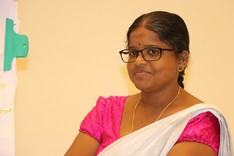
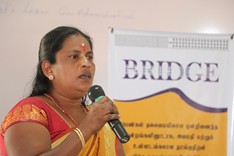
From Denied Nomination to a Women-Led Political Platform: Roman Diffna Croos’s Stand for Inclusive Governance in Mannar

In the male-dominated political landscape of Northern Sri Lanka, systemic gender bias often relegates capable women to peripheral support roles. In Pesalai, Mannar District, Roman Diffna Croos—a former local government councillor—faced this reality head-on. Despite her proven dedication and articulate leadership, her former party, the All Ceylon Makkal Congress (ACMC), repeatedly sidelined her when candidate nominations were finalized.

Rather than withdrawing from public life, Roman turned institutional exclusion into an unprecedented movement. Supported by Chrysalis and the BRIDGE Programme, she transformed her experience into an independent, women-led political platform that is redefining local governance in Mannar.

Breaking Free from Party Gatekeeping

Roman’s early political career under the ACMC was defined by persistent resistance to her outspoken, analytical nature. While the party utilized women for grassroots mobilization, it repeatedly refused to grant them decision-making power or election nominations. The breaking point arrived ahead of the scheduled 2023 local government elections, when the party once again passed her over in favor of male candidates.

Faced with structural barriers designed to limit female representation, Roman chose to rewrite her path. Through the BRIDGE Programme, the District Women Councillors’ Caucus, the PAFFREL Diploma in political and social studies, and the Women Campaign Academy, she acquired comprehensive training in election law, public speaking, strategic messaging, and resource-lean campaigning.

Armed with technical knowledge and newfound independence, Roman registered an independent, women-led political party in Mannar under the bullock cart symbol.

Strategic Interventions: Building a Platform for the Next Generation

Roman built her party around inclusive, community-rooted principles, drawing support from Women’s Rural Development Societies (WRDs), schools, media, and cultural networks:

Cross-Gender Alignment: Launched with 23 founding members (14 women and 9 men), the party grew to 30 active members, demonstrating that women-led political initiatives can command broad, cross-gender support.

Experience-Sharing & Mentorship: Established structured workshops to prepare women and youth in Mannar to speak publicly, navigate election mechanics, frame community issues, and overcome gendered political obstacles.

Resource-Light Campaigning: Applied practical, low-cost campaign strategies learned at the Women Campaign Academy to compete effectively without reliance on big-money political backing.

Holistic Community Service: Beyond electoral politics, Roman mobilized external funding (including UNDP support) for local self-employment initiatives and distributed essential school supplies and stationery to community children.

Impact and Transformative Leadership

The party's campaign culminated in a historic breakthrough: winning a seat in the local government elections.

In a powerful display of transformative leadership, Roman made the deliberate choice not to occupy the seat herself. Instead, she passed the mandate to another female member of her party, establishing a culture of succession, shared power, and collective empowerment.

"I rewrote fate, erased backward myths, and became a role model. Now I want every woman to know — they can too. If women can join, they can do anything."

Roman Diffna Croos, Founder & Political Leader, Mannar

Key Learnings

Roman Diffna Croos’s journey offers vital lessons for women’s political participation across Sri Lanka

Exclusion as Catalyst: When equipped with campaign methodologies and political knowledge, women can convert party exclusion into independent political platforms.

Peer-to-Peer Preparation: Lived-experience mentoring and public speaking workshops significantly lower the barrier to political entry for women and youth.

Succession-Oriented Leadership: True political empowerment occurs when leaders create opportunities for other women to step forward into elected roles.

Looking Ahead: A Replicable Model for Women in Politics

Roman Diffna Croos’s transition from a sidelined party member to the founder of an elected, independent platform demonstrates the potential of targeted political readiness training. Supported by Chrysalis and the BRIDGE Programme, her work proves that when women lead on their own terms, they build resilient platforms that advance democratic accountability and community wellbeing.

View Case Study
case study thumbnail

Making Public Transport Safer and More Respectful for Women: How Kulagowry Transformed the Jaffna Transit Experience

Public transit is an indispensable lifeline for daily life, economic participation, and access to essential services. However, for the over 2,000 commuters who pass through the Jaffna Central Bus Stand daily—more than half of whom are women and girls—navigating public transport was long fraught with anxiety, inadequate facilities, and unaddressed harassment.

Leading the charge to transform public transport from a risk into a safe, dignified space is Ms. Kulagowry, Vice President of the Federation of Civil Society Organizations in Jaffna District. Supported by Chrysalis through the European Union-funded BRIDGE Programme, Kulagowry gained essential digital skills, case documentation techniques, and strategic advocacy tools, turning everyday transit safety into an active governance issue.

The Challenge: Invisible Hazards at Transit Hubs

Despite serving as the primary transit hub in Jaffna, the Central Bus Stand lacked fundamental protection infrastructure. Women travelling during early morning or late evening hours faced unlit waiting areas, harassment, and no functional emergency mechanisms or police presence.

Basic sanitation and essential facilities were similarly compromised. The designated mother-feeding room was misused and inaccessible, forcing mothers to feed infants in public, while poorly maintained rest facilities caused many women to avoid using them entirely due to hygiene and safety concerns. Without formal grievance channels, transit safety remained an unaddressed, private burden carried by female passengers.

Strategic Interventions: Multi-Tiered Advocacy & Public Governance

Recognizing that transportation safety directly impacts women’s economic mobility, education, and healthcare access, Kulagowry orchestrated a multi-tiered advocacy campaign:

Cross-Level Awareness Sessions: Organized three structured awareness convenings targeting distinct governance tiers—engaging provincial health and road transport authorities, the Jaffna District Secretary alongside drivers and conductors, and local village-level stakeholders at the Kopay Divisional Secretariat.

Institutional Grievance Mechanism: Partnered with the CSO Federation to install and take formal responsibility for a dedicated complaints box at the Jaffna Central Bus Stand.

High-Level Formal Submissions: Coordinated a simultaneous formal petition delivered to the District Secretary, the Governor of the Northern Province, the Secretary of the Provincial Women's Ministry, and the Mayor of Jaffna Municipal Council requesting a permanent, 24-hour police booth.

Digital Documentation & Capacity Transfer: Applied ICT skills to document cases and draft formal smartphone-based submissions, subsequently training approximately 40 participants across local women's societies to expand community advocacy capacity.

Sustained Governance Alliances: Facilitated a three-party advocacy coalition uniting the Civil Society Federation, the Town Hall platform, and the Jaffna District Women’s Political Council to ensure ongoing institutional oversight.

"BRIDGE was a path that helped us cross our challenges and find solutions. We now believe through persistent advocacy you can find solutions to long standing issues."

Ms. Kulagowry, Vice President, Federation of Civil Society Organizations, Jaffna

Measurable Safety Improvements

Kulagowry’s persistent, evidence-based advocacy achieved concrete infrastructure and policy outcomes:

Operational Safety Alarm: Restored functionality to the central bus stand’s safety alarm system, providing an immediate emergency mechanism.

Restructured Mother-Feeding Facility: Reorganized the mother-feeding room with a dedicated key-holder access system to prevent misuse and restore privacy and dignity for nursing mothers.

Restroom Sanitation & Upgrades: Restored operational standards to two key public restrooms managed by the Jaffna Municipal Council and Sri Lanka Transport Board, accompanied by regular municipal waste removal.

Visible Awareness: Installed public safety signage and rights stickers across the terminal to normalize the expectation of harassment-free public spaces.

Broader Community Impact: Facilitated district town hall dialogues that connected over 100 community members with government officials, leading directly to clean drinking water interventions in Neervely.

Looking Ahead: Institutionalizing Safe Spaces

Kulagowry’s initiative demonstrates that transit safety is a foundational rights issue. By combining digital documentation, multi-level stakeholder coordination, and institutional accountability, her work with the BRIDGE Programme has set a scalable benchmark for gender-sensitive public infrastructure across Sri Lanka.

View Case Study
case study thumbnail

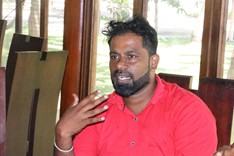
Birth Certificates as a Doorway to Rights and Recognition: How Rajeevkaran Restored Civil Entitlements in Kilinochchi

In post-conflict Kilinochchi, a single missing document often stands as an insurmountable barrier between vulnerable families and their basic rights. For many families—particularly upcountry Tamil communities who relocated to the district—the absence of a birth certificate blocks access to National Identity Cards (NICs), state welfare programs like Aswesuma, school enrollment, legal employment, and secure land tenure.

Leading the effort to break this cycle of invisibility is Mr. Rajeevkaran, a dedicated social activist and President of the Federation of Civil Society Organizations in Kilinochchi District. Supported by Chrysalis through the European Union-funded BRIDGE Programme, Rajeevkaran transformed informal community concerns into a structured, evidence-based advocacy system that is unlocking civil entitlements across the district.

The Challenge: A Cascading Chain of Exclusion

For hill-country Tamil families living in Kilinochchi, obtaining a birth certificate presents unique structural hurdles. To apply for delayed registration, individuals must first secure a theduthal (declaration of search) form from their distant upcountry place of origin—a journey involving prohibitive travel costs and complex bureaucratic procedures. Without external support, families remained trapped in documentation gaps for decades.

This documentation gap created a cascading chain of exclusion. Without a birth certificate, individuals could not obtain an NIC; without an NIC, they were systematically excluded from essential welfare programs like Aswesuma, public examinations, voter rolls, and official land title deeds in areas like 40 Ponnagar and Dharmapuram.

Strategic Interventions: From Field Research to District Advocacy

Supported by BRIDGE training in human rights, ICT documentation, and town hall facilitation, Rajeevkaran launched a systematic campaign to bridge the documentation gap:

Evidence-Based Field Research: Conducted structured research across 5 initial villages, gathering concrete data to prove that missing documentation was an institutional failure rather than individual negligence.

Institutional Coordination: Presented research findings jointly to the Kilinochchi District Secretariat and Divisional Secretariat Karaichi, expanding the campaign's scope from 5 to 9 Grama Niladhari (GS) divisions.

Direct Procedural Facilitation: Established a hands-on support system—assisting families in completing theduthal forms, monitoring form dispatches alongside government officials, and utilizing a case-tracking checklist.

High-Level Land Rights Representation: Leveraged shadow town halls and high-level panels to advocate for formal land tenure for long-standing residents in 40 Ponnagar and Dharmapuram.

Community-Wide Engagement: Facilitated district town hall dialogues and organized mobile awareness sessions that directly educated 200 community members on civil documentation rights.

"BRIDGE engagements helped people learn, lead, and create positive change in their communities."

Mr. Rajeevkaran, President, Federation of Civil Society Organizations, Kilinochchi

Measurable Results and Community Impact

Rajeevkaran’s structured advocacy achieved transformative outcomes across Kilinochchi District:

Comprehensive Registration: Formally registered 352 birth certificate cases across 9 GS divisions.

Procedural Bottlenecks Cleared: Successfully filed over 170 theduthal forms, clearing the primary procedural obstacle for upcountry Tamil families.

Civil Entitlements Restored: Directly secured birth certificates for 20–30 families (with processing ongoing), restoring their immediate access to NICs, Aswesuma welfare benefits, schooling, and banking.

Progress on Land Rights: Prompted the Divisional Secretariat to formally review land tenure documentation for families in 40 Ponnagar and Dharmapuram.

Expanded Capacity: Enabled community members to engage directly with state institutions and utilized ICT skills to increase local awareness of government welfare schemes.

Looking Ahead: Securing Civil Identity as a Foundation for Growth

Rajeevkaran’s work proves that civil documentation is the foundational doorway to all other human rights. By converting individual struggles into documented community entitlements, his advocacy through the BRIDGE Programme demonstrates how civil society leadership can partner with local government to ensure no citizen remains invisible.

View Case Study
case study thumbnail

From Town Hall Discussion to Decision-Maker Engagement: Driving Social Accountability in Kilinochchi

In post-conflict Kilinochchi, where displacement disrupted civil infrastructure and fractured community-state relationships, local issues—ranging from missing birth certificates to inadequate street lighting and water access—often went unaddressed for years. Community members, particularly women, lacked formal, structured channels to present their concerns directly to service providers and demand institutional accountability.

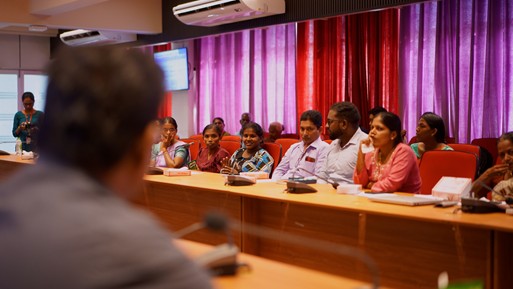
To bridge this gap, the Kilinochchi District Civil Society Organizations (CSO) Federation, supported by Chrysalis through the BRIDGE Programme, introduced a quarterly town hall and shadow town hall model co-chaired by the Provincial Ministry of Women's Affairs and the District Secretariat. This initiative has transformed scattered grassroots complaints into a structured platform for local democracy and service delivery.

The Challenge: Governance Deficits and Unaddressed Grassroots Concerns

Despite high poverty rates and significant gaps in local services, rural residents—especially women and upcountry Tamil families resettled after the conflict—had no direct access to decision-making bodies like the District Coordinating Committee (DCC).

Critical issues such as saline water intrusion, illegal sand mining, poor waste management, and the lack of basic civil documentation remained unresolved. Without birth certificates or National Identity Cards (NICs), affected families were structurally excluded from state welfare programs like Aswesuma, formal employment, banking, and higher education.

Strategic Interventions: Structured Dialogue and Capacity Building

Through the BRIDGE Programme, civil society leaders were equipped with skills in ICT-based evidence documentation, human rights advocacy, and shadow town hall facilitation:

Quarterly Town Hall Platforms: Established recurring, documented multi-stakeholder sessions bringing community members face-to-face with government service providers.

Capacity Cascading: Trained community leaders who subsequently shared skills with 64 local women political leaders, activists, and human rights defenders.

Mobile Birth Certificate Services: Collaborated with the District Secretariat, Divisional Secretariat Karaichi, and the Registrar General’s Department to launch a mobile documentation service directly in target villages.

Centering Women's Voices: Created an inclusive space where women represent over 50% of active participants, elevating issues like women's safety, transport for pregnant women, and child protection.

"These town halls are grassroots democracy in action... Communities now know how to demand. Institutions now know they must respond. That is the most powerful change I have witnessed."

Mrs. Nalayene Inparaj, Additional District Secretary, Kilinochchi District

Measurable Impact and Key Outcomes

The town hall framework has established a track record of institutional responsiveness:

High Resolution Rate: Across eight town hall sessions, community representatives raised 59 issues, leading to 57 formal decisions (a 97% decision rate) and 15 fully resolved cases to date, with recent 2026 sessions reaching a 100% resolution rate.

Direct Documentation Relief: The joint mobile service issued 60 birth certificates in its initial drive, with 70 additional applications currently processing out of 130 submitted across 9 Grama Niladhari divisions.

Restored Welfare and Entitlements: Beneficiaries who received documents gained immediate eligibility for Aswesuma welfare support, school registrations for 20 students, bank loans, and formal legal transactions.

Sustained Leadership: Built local capacity to continuously monitor commitments and track institutional follow-up between formal sessions.

Looking Ahead: Institutionalizing Grassroots Democracy

By providing structure, evidence, and preparation, Kilinochchi’s town hall model demonstrates that community advocacy can turn informal grievances into binding institutional commitments. The platform continues to ensure that local governance actively addresses the priorities of the citizens it serves.

View Case Study
case study thumbnail

Young Lawyers Becoming a Protection Resource for HRDs: Transforming Legal Theory into Community Advocacy

In Northern Sri Lanka, communities carry complex legal needs shaped by decades of armed conflict, post-war land disputes, suppressed identities, and persistent structural barriers. While basic legal rights exist on paper, a critical gap remains: the need for legal professionals who understand these lived realities well enough to translate rights into practical protection and justice.

To bridge the disconnect between classroom legal theory and community reality, the Law and Society Trust (LST), in partnership with Chrysalis under the BRIDGE project, implemented the Fellowship Programme on Gender and Human Rights (January 2024 – March 2025). Engaging 35 young legal professionals—including practising lawyers and law students from the University of Jaffna—the fellowship transformed emerging lawyers into active human rights defenders (HRDs) and protection resources across Northern Sri Lanka.

The Challenge: Moving Past Theoretical Legal Education

Conventional legal education in Sri Lanka relies heavily on statutory texts and case law, offering limited exposure to grassroots legal struggles. Young legal professionals often enter the field without practical insight into complex local challenges, such as:

Protecting the rights of LGBTQI+ individuals navigating hostile legal environments.

Resolving land tenure disputes for long-displaced families

Advocating for Muslim personal law reform, including child marriage protections.

Providing survivor-centered support for domestic violence and sexual and gender-based violence (SGBV) cases.

Navigating maritime legal issues for fishermen detained in cross-border disputes.

Additionally, young lawyers from rural districts like Mannar frequently lack professional connections with senior practitioners, human rights institutions, and referral networks, leaving them isolated when attempting to address systemic injustices.

Strategic Interventions: Experiential Learning and Protective Networks

The fellowship established an experiential, three-tiered learning framework to connect young lawyers directly with community needs and national human rights mechanisms:

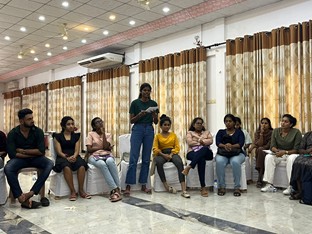
Community Consultations: Conducted five 1-day consultations across all northern districts, bringing fellows into direct dialogue with local activists, victims, and HRDs to analyze ground-level human rights situations.

Targeted Legal Remedy Training: Held five 2-day training sessions following the consultations, equipping fellows with actionable knowledge on legal frameworks surrounding SGBV, land rights, and human rights violations.

Institutional Lobby Tours: Organized six regional and national exposure visits—including engagements with the Human Rights Commission of Sri Lanka (HRCSL), national BAR associations, SGBV/LGBTIQ networks, and an exposure visit to Hambantota in Southern Sri Lanka to study national patterns of structural exclusion

Integration into Referral Networks: Directly linked participants to LST’s multi-stakeholder referral network, establishing formal channels to assist human rights defenders and vulnerable community members.

"Before this programme, I studied law but I didn’t fully understand the people law is supposed to serve... I came back knowing that wherever I practise, I have a responsibility to the community, not just to the law."

Law Fellowship Participant

Measurable Results and Community Impact

The fellowship successfully built a network of legal advocates who actively deploy their skills for community protection:

Capacity & Network Expansion: Connected 35 legal fellows (15 lawyers and 20 law students) with senior legal practitioners, civil society organizations (CSOs), and state human rights bodies.

Cross-Border Maritime Advocacy: Fellow Kanila, now practising as an attorney-at-law, applied her training to assist legal initiatives supporting Sri Lankan Tamil fishermen arrested by the Indian Navy, directly contributing to securing the release ofdetained fishermen.

Voluntary Community Legal Aid: Pre-qualification law students established voluntary guidance and referral pipelines, helping community members navigate domestic violence and land dispute processes before seeking formal representation.

Expanded Perspective on Exclusion: Southern exposure visits reframed local northern challenges as broader national rights issues, encouraging cross-regional solidarity and advocacy.

Looking Ahead: Institutionalizing Rights-Based Legal Practice

By linking legal education directly to community protection and institutional referral mechanisms, the BRIDGE Programme has empowered a new generation of legal professionals in Northern Sri Lanka. These young lawyers continue to serve as a vital protection resource, ensuring that the law functions as an accessible tool for justice.

View Case Study
case study thumbnail

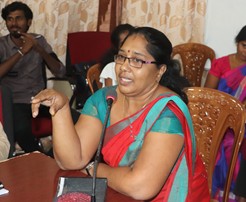
Opening Space for Women in Provincial Cooperative Leadership: Transforming Grassroots Economic Governance in Mullaitivu

In Sri Lanka’s Northern Province, cooperative societies serve as vital economic lifelines—managing micro-credit, agricultural support, and community welfare. However, despite women playing a central role in household economies and community life, cooperative governance structures historically remained heavily male-dominated. Grassroots concerns carried by women rarely reached executive decision-making tables.

To challenge this structural exclusion, Kalaiselvi Suntharalingam—a 47-year-old female head of household from Puthukkudiyiruppu—partnered with Chrysalis through the BRIDGE Project and its predecessor initiatives to build collective women’s leadership across village, divisional, district, and provincial cooperative networks.

The Challenge: Male-Dominated Governance and Disconnected Community Voices

In post-conflict Mullaitivu, women lacked formal representation in governance platforms that controlled essential economic resources. Community concerns raised at the grassroots level lacked structured pathways to reach local authorities or provincial decision-makers.

Navigating formal governance required skills in institutional advocacy, dispute resolution, conflict management, and public engagement—capacities that male-dominated structures rarely fostered among women leaders. Without targeted support, capable women remained sidelined from policy and budget decisions.

Strategic Interventions: Multi-Tier Advocacy, Right to Information, and Town Halls

Supported by Chrysalis, Kalaiselvi developed comprehensive skills in leadership, conflict sensitivity, Right to Information (RTI) activism, and public advocacy, deploying multi-pronged strategies to transform local governance:

Advocating for Gender Quotas: Spearheaded an advocacy campaign calling for 50% women’s membership in public and cooperative institutions across Mullaitivu District.

Active Right to Information (RTI) Practice: Filed 56 RTI requests (securing 53 official responses) targeting elder care, land documentation, remote government service access, and welfare eligibility for female-headed households and gender-based violence (GBV) survivors.

Institutionalizing Town Halls: Contributed to the passage of a formal local authority resolution establishing recurring, documented town hall sessions in Mullaitivu District to hold decision-makers directly accountable.

Multi-Level Representation: Escalated grassroots economic priorities by advancing to key leadership positions, including President of the Mullaitivu District Cooperative Council and Executive Committee Member of the Northern Province Cooperative Development Bank.

"I learned how to build leadership skills and handle conflict within organisations. But the most important thing I learned was that women’s membership in public institutions is not a favour—it is a right. When women sit at the table, the issues that matter to communities actually get discussed."

Kalaiselvi Suntharalingam, President, Mullaitivu District Cooperative Council

Measurable Results and Systemic Norm Shifts

Kalaiselvi’s sustained advocacy has reshaped civil society and economic governance across Mullaitivu:

Formal Adoption of Gender Quotas: Five key types of cooperative societies—including Multi-Purpose Cooperative Societies (MPCS), Farmer Cooperatives, and Thrift and Credit Cooperative Societies (TCCS)—adopted a 40% women’s membership target.

Surge in Women's Membership: Over 600 women newly joined cooperative general bodies over two years, with women now holding 25% to 30% of executive positions across TCCS and MPCS networks.

District-Wide Community Centre Reform: All 159 community centres in Mullaitivu District increased women’s membership up to 40%, with women occupying 20% to 25% of executive leadership positions.

Institutional Recognition: Awarded the prestigious district-level ‘Ariyathai’ Award by the Governor of the Northern Province and the District Secretary of Mullaitivu for outstanding contributions to grassroots community empowerment.

Looking Ahead: Institutionalizing Inclusive Governance

Kalaiselvi’s journey demonstrates that cooperative societies are not merely financial mechanisms, but powerful civic accountability platforms. By institutionalizing gender equity and town hall accountability, the BRIDGE Programme continues to ensure that local and provincial governance reflects the voices and priorities of the communities it serves.

View Case Study